Bab Zuweila: An Icon of Islamic Cairo
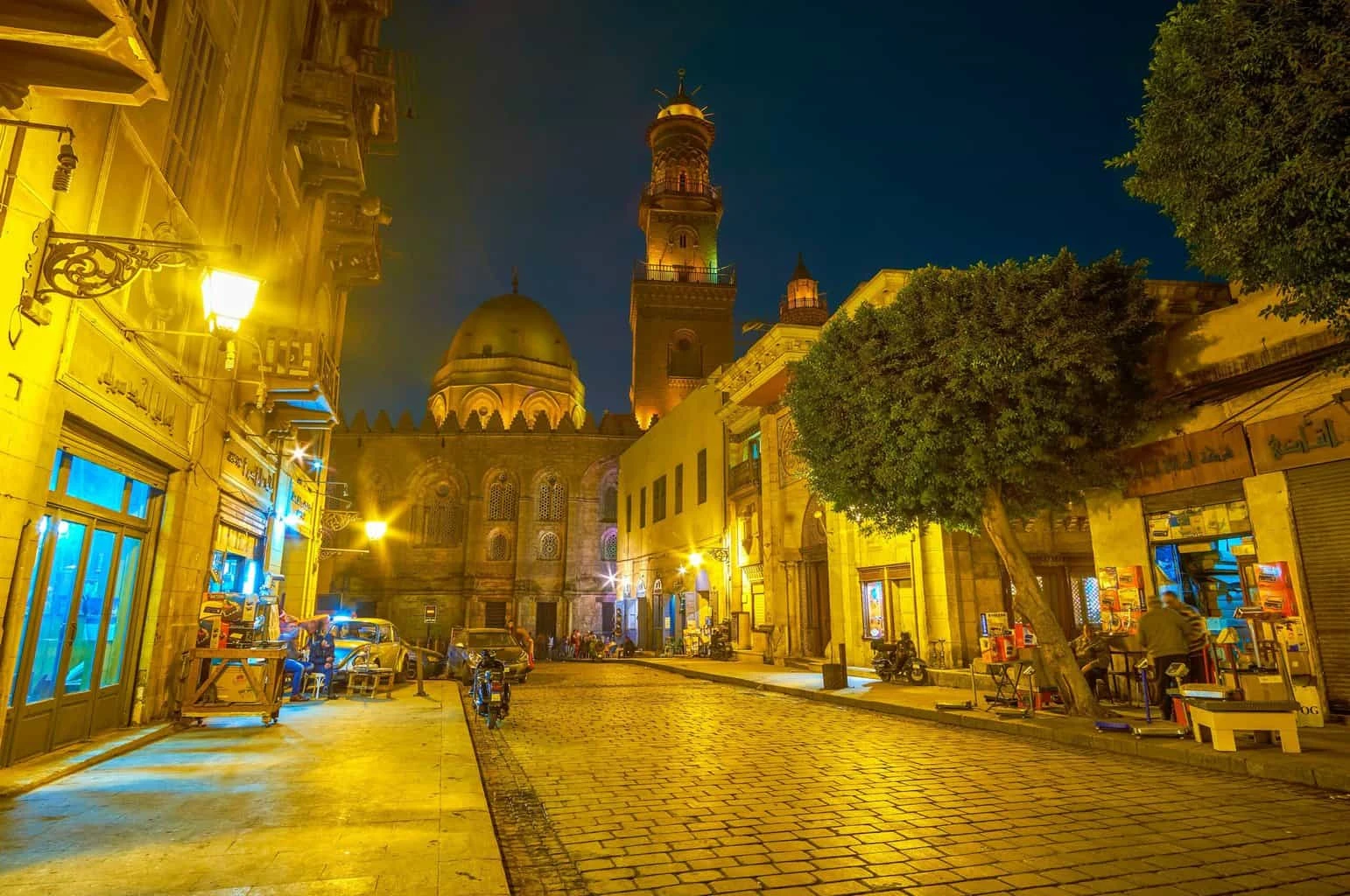
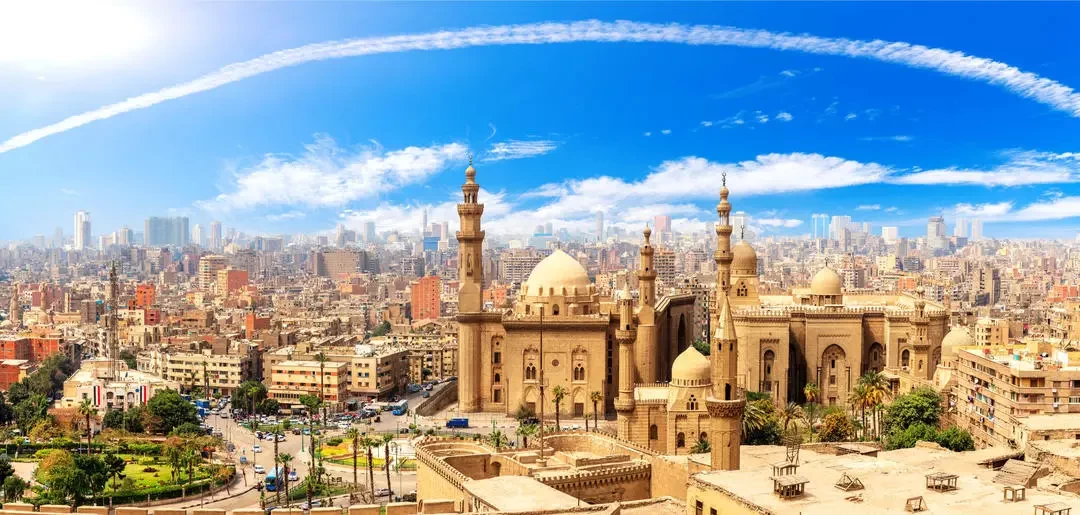
Bab Zuweila is an old gate in Cairo. Lots of visitors stop there to look around. The gate was built in 1092 AD. At that time, the Fatimids were ruling. At that time, the gate guarded the way into the city from the south. Today you can look up at the tall stone towers and walk through the area around the old entrance. Some visitors also try the minarets and take in the sights from above. From this spot, you can see parts of Cairo’s older districts.
The gate sits not far from Al-Muizz Street. It is also close to the Tentmakers’ Market and the Mosque of Sultan Al-Mu’ayyad Shaykh. Because of its location, Bab Zuweila works well during Cairo Day Tours. If you plan your route with Day Tours Egypt, you can spend time with the local history and the design details that still stand today. That is part of why Egypt draws so many travelers from across the world.
The History of Bab Zuweila in Cairo
Bab Zuweila is still there in Cairo. Many other old gates have vanished, but this one remains. You may also see its name spelled as Bab Zuwayla or Bab Zuwaila. This gate is linked with the Fatimid period and is often counted among the last remaining gates of that era.
The gate was built in 485 AH, which matches 1092 AD. The builder is given as Badr al-Gamali, a Fatimid vizier. The work happened during the time of Caliph al-Mustansir.
Bab Zuweila belonged to the walls meant to guard Cairo. The city was growing fast, so defense mattered. In that period Cairo had large fortifications and more than one entrance. Later, as the city grew and new neighborhoods appeared, several original gates disappeared. Bab Zuweila did not meet that same fate. Its military design helped it last, and it stayed useful across later ages.
The name “Zuweila” is tied to the Zuwayla tribe. This group is described as North African. The tribe is also connected with Jawhar al-Siqilli, the commander who helped found Fatimid Cairo. Another name for the gate was Bab al-Mitwalli. That name points to an official connected to money and tax work in the area.
Over many centuries, Bab Zuweila saw more than daily traffic. It was part of political moments and public events, People used it during royal processions and religious celebrations. It also stood near very tense scenes in Cairo’s past.
One event is often singled out. In 1517, Ottoman Sultan Selim I defeated the Mamluks. After that, he ordered Sultan Tumanbay to be executed near the gate. This part felt important. It marked the close of the Mamluk period in Egypt. Then Ottoman control started.
Because the gate has such a long record, Bab Zuweila is more than a passage in a wall. It has been a witness to changes in Cairo over time. The Egyptian Ministry of Tourism and Antiquities lists it as one of the southern gates of Fatimid Cairo. It also notes the year of construction as 1092 AD.
The Architecture and Twin Minarets
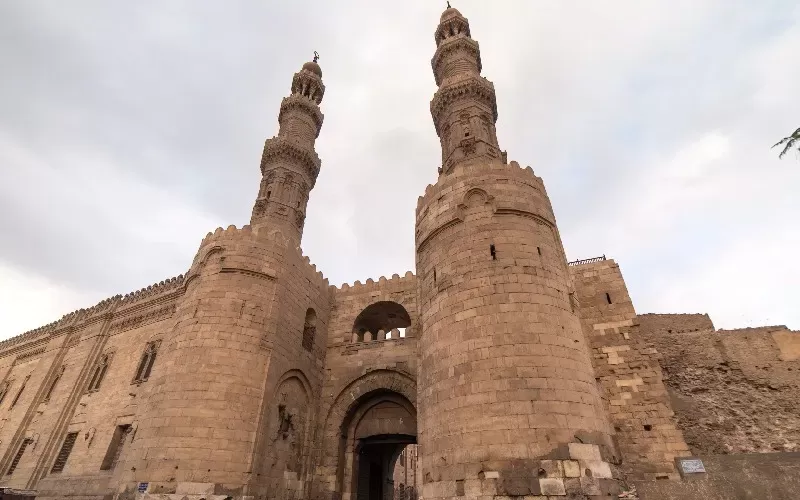
Bab Zuweila shows what Fatimid builders could do with both force and imagination. The gate has two large half circle towers. Between them runs a passage that leads into the city. The opening is about 4.82 meters across. That space was made so people, animals and supplies could move through the walls.
The builders used thick limestone. The goal was safety first, but the structure also had to look strong. Even now, you can see the tight corridor, the heavy stone, and the defensive details. They help explain how medieval Cairo was set up and how the city guarded itself.
Another standout at Bab Zuweila is the two minarets. They sit above the older towers. These minarets are part of the Mosque of Sultan al Mu’ayyad Shaykh. The mosque was made in the Mamluk period, from 1415 to 1421.
Sultan al Mu’ayyad Shaykh did not start from nothing. He used the base of the two Fatimid towers to hold up the mosque’s minarets. So you get one site that mixes Fatimid military design with Mamluk religious form. This is why the skyline of Islamic Cairo feels so familiar from far away.
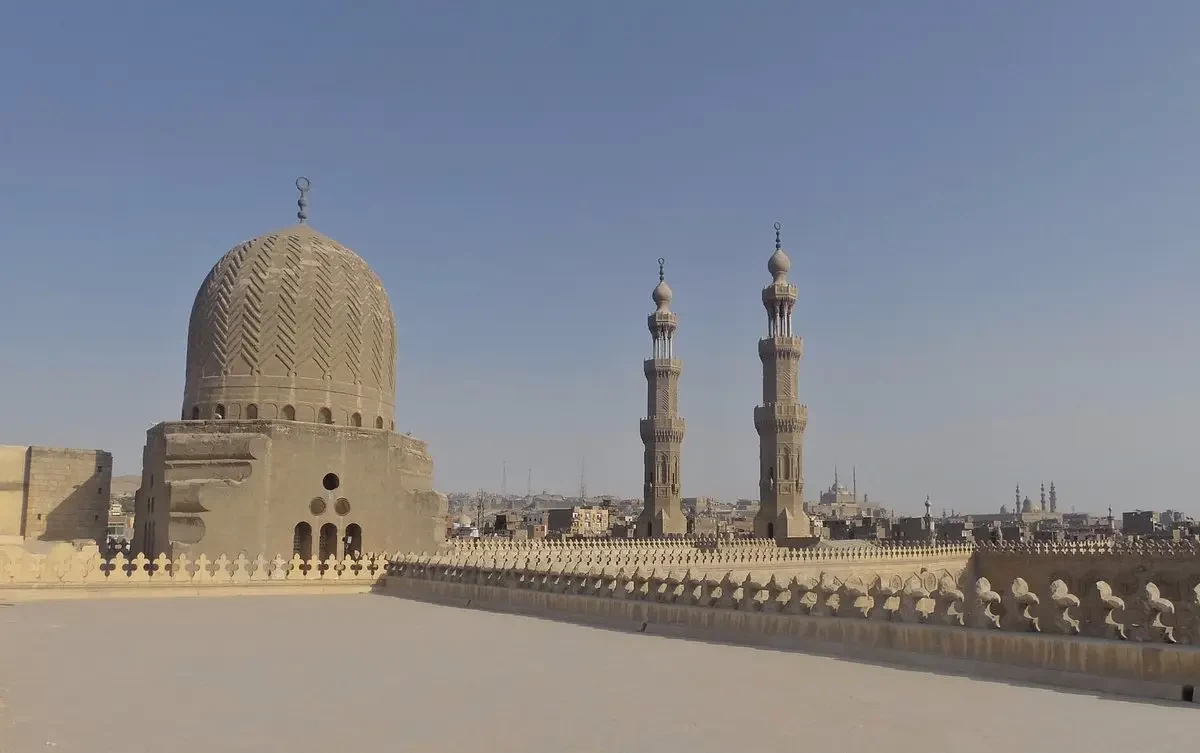
If you climb the minarets, you get wide views over the old city. You can spot domes, other minarets, rooftops, and narrow lanes. You can also see markets that are always active. The steps are tight and the climb is steep. Still, the view gives a memorable look at Cairo’s cultural character.
Bab Zuweila also shows how old buildings can change roles. It started as a defensive gate. Later it linked with religious architecture, local customs, and everyday life in Cairo.
Visiting Bab Zuweila and nearby sights in Cairo
Bab Zuweila fits well into a longer day plan for Islamic Cairo. The gate is close to Al-Muizz Street. That street is known for its old buildings and long history. Along the area, people can spot mosques, schools, mausoleums, older homes, and markets that still feel like the past.
Near Bab Zuweila, you will find the Mosque of Sultan al-Mu’ayyad Shaykh. Many visitors stop there because its minarets connect in a clear way to the gate’s towers. After that, head toward the Tentmakers’ Market, also called Sharia Khayamiya. Here, craftspeople sell and make textile goods with bright colors. The patterns draw from older Egyptian styles.
Walk around the lane network near the gate. It is busy in a natural way. This makes the area good for slow walking and street photos. You can also add Khan El Khalili Bazaar, Al-Azhar Mosque, the Mosque of Sultan Hassan, the Al-Rifa’i Mosque and Wekalet El Ghouri. When you visit these in the same trip, you get a fuller view of medieval Cairo through art, faith and trade. This route can also be included in a Cairo Day Tour.
For mosque visits, dress in a respectful way. Bring comfortable shoes since the ground can be uneven. Make sure you leave extra time. That way you can walk the nearby streets without feeling rushed. The monument details I read had visiting hours listed from 9:00 AM to 5:00 PM. Still, opening times and ticket rules can change, so check the latest info before you go. A guide can help too, because some stories tied to Bab Zuweila are hard to place if you do not have background.
Experience Bab Zuweila with Cairo Day Tours
Bab Zuweila is a great stop for people who want more than just the pyramids and old temple sites in Egypt. The Giza Pyramids show the pharaonic story, but Bab Zuweila gives you a closer look at Cairo’s medieval life. You also get to see Islamic building styles up close.
If you plan a Cairo day tour, you can pair Bab Zuweila with Al-Muizz Street and Khan El Khalili. You can also visit Al-Azhar Mosque and some Mamluk monuments nearby. Done this way, it feels like a single long route through central Cairo, focused on history and culture.
Day Tours Egypt can help you understand the gate better. Guides share what the name means and why the gate mattered for city defense. They also point out key events connected to the area.
If you want photos, try going in the morning or toward late afternoon. The light during these times makes the limestone walls look clearer. It also creates strong views from the minarets.
After you tour the gate, spend time in the nearby markets. Many stalls sell handmade souvenirs, traditional fabrics, brass items, spices, and local crafts. It is a good place to pick up small gifts.
Bab Zuweila fits well in any Egypt travel guide. You can trace Cairo’s changes over time, from the Fatimid period to the Mamluk era and later the Ottoman shift. No matter if you care most about history, architecture, religion, or everyday local life, this gate makes a memorable stop.
Add Bab Zuweila to your Egypt day tours list and explore a major Cairo attraction with the support of Cairo Day Tours and Day Tours Egypt.