FR
 IT


Dendera Temple Complex: Discover the Temple of Hathor
Dendera Temple Complex is a rewarding excursion from Luxor. Dedicated mainly to Hathor, the goddess associated with love, music, motherhood and joy, it contains columns, colorful reliefs, hieroglyphic inscriptions, chapels, crypts and astronomical decoration. Most surviving structures date to the Ptolemaic and Roman periods, although the site has a longer history. Discover Hathor-headed columns, decorated interiors and the Dendera Zodiac to explore ancient Egyptian ideas about the sky. A Luxor tour can include this site in your Egypt itinerary.
Dendera Temple Complex: Discover the Ancient Temple of Hathor
Dendera stands on the west bank of the Nile, north of Luxor. Its well-preserved Temple of Hathor honors the goddess of love, music, motherhood, joy and the sky. Columns, reliefs, ceilings, entrances and inscriptions reveal the sophistication of Egyptian temple architecture.
The main surviving temple dates to the Ptolemaic and Roman periods, but the worship of Hathor here is much older. Its carvings bring together long-standing Egyptian religious traditions and artistic influences from later periods.
For visitors staying in Luxor or traveling through Upper Egypt, Dendera offers a day trip beyond the city’s best-known temples, particularly for those interested in ancient religion and mythology.
The Temple of Hathor and Dendera’s Sacred History
The main building located inside the Dendera complex is the Temple of Hathor, which is the primary attraction there. Hathor was one of the deities that had been popular throughout the whole history of ancient Egypt and was believed to represent love, music, motherhood, fertility, beauty, and joy. This made her cult exist for centuries before the temple, which can be seen today, had been built.
This temple mostly dates back to the Ptolemaic era, although some structures were built even during the Roman era. Even though this structure is relatively young, it still has much in common with other Egyptian temples because it follows the traditional architectural style and features numerous carvings on the walls and columns depicting various gods, offerings, rituals, and inscriptions written in hieroglyphics.
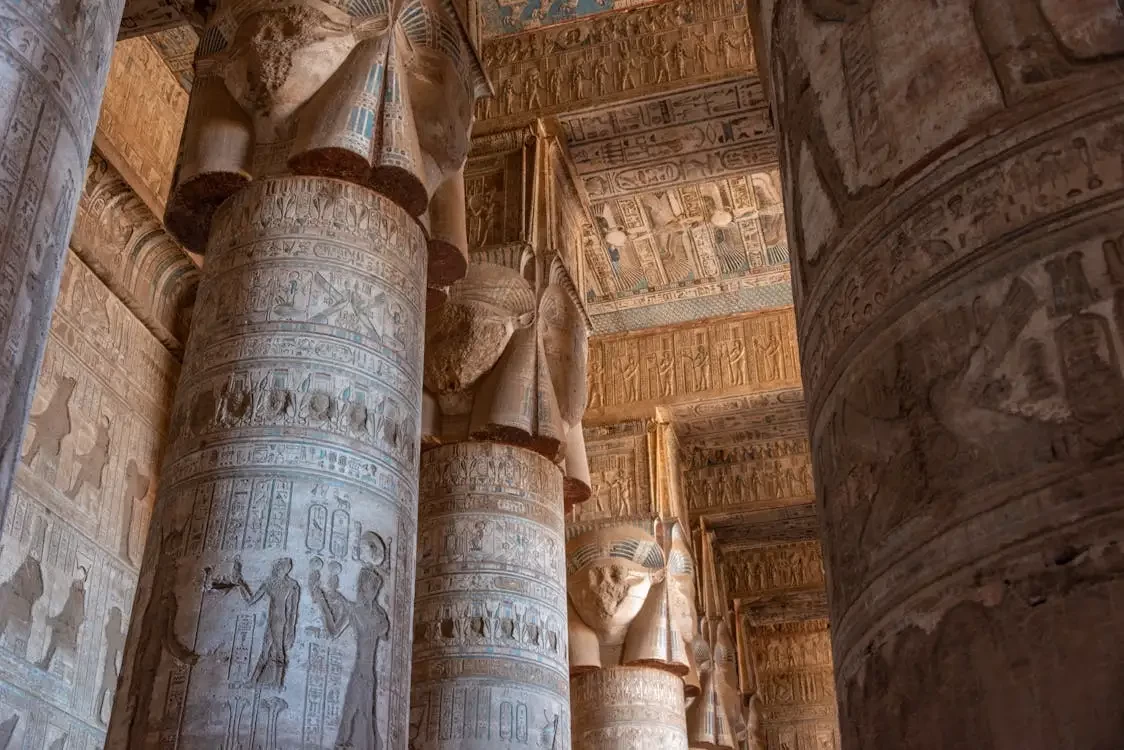
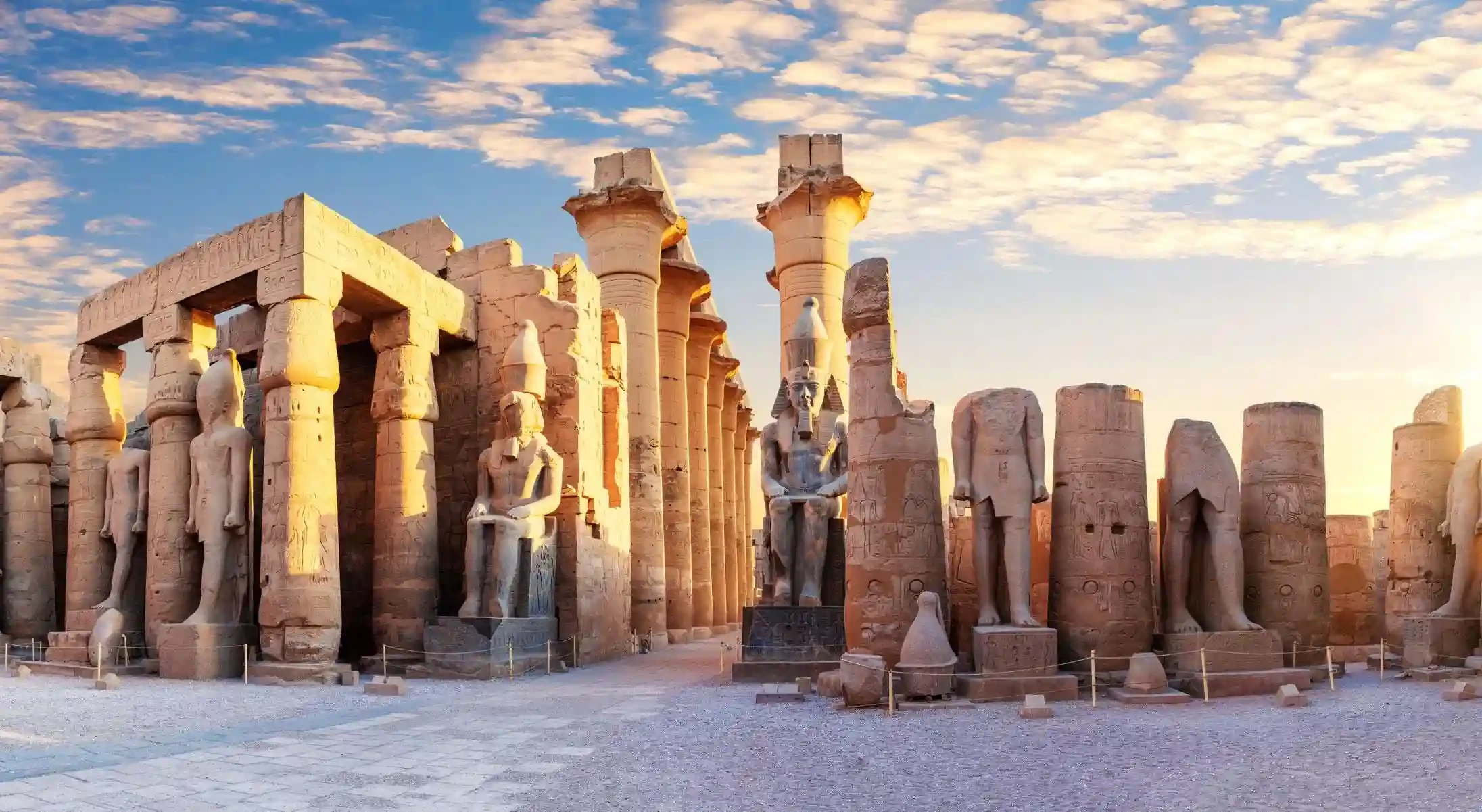
The most impressive part of the structure is its façade adorned with colossal figures of various deities. In the interior, visitors can admire the hypostyle hall with huge columns and Hathor-headed capitals.
Marvel at Dendera’s Columns, Reliefs and Ancient Artwork
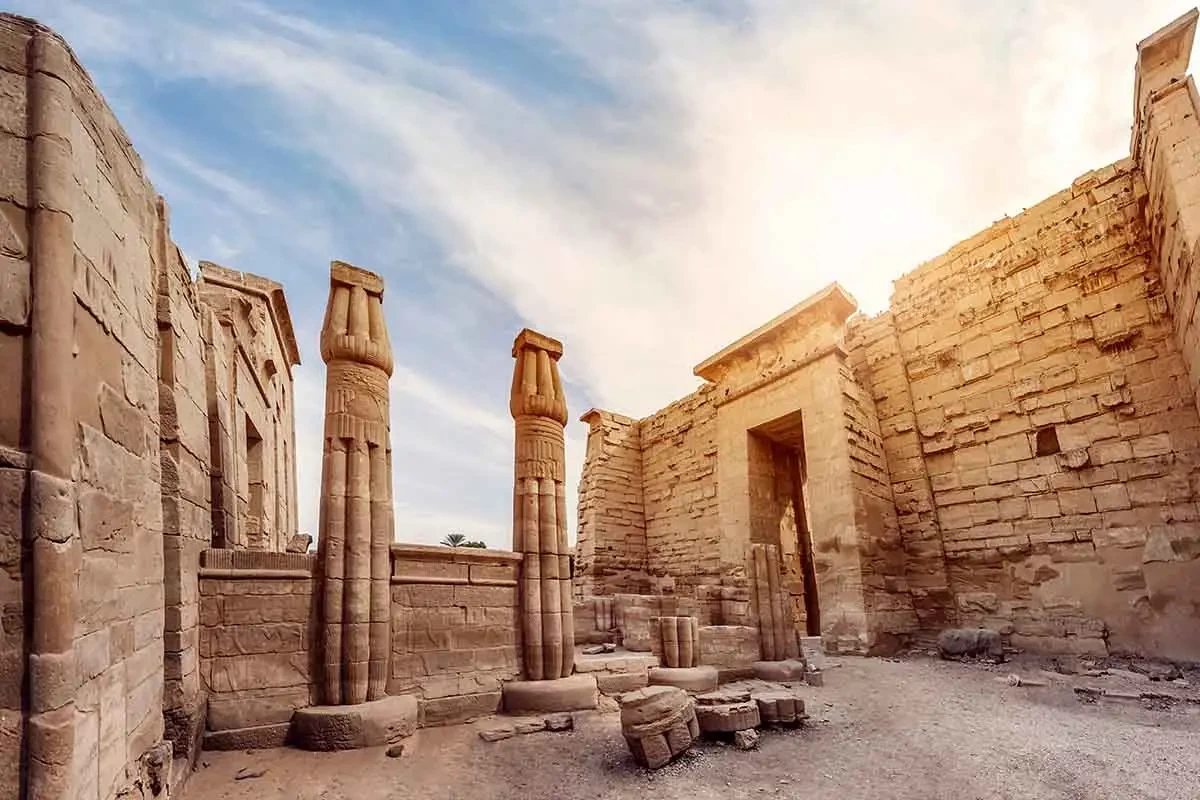
Dendera’s architecture is one of the highlights of a visit. Massive columns, decorated walls, detailed inscriptions and well-preserved reliefs make the complex particularly rewarding for visitors interested in Egyptian art.
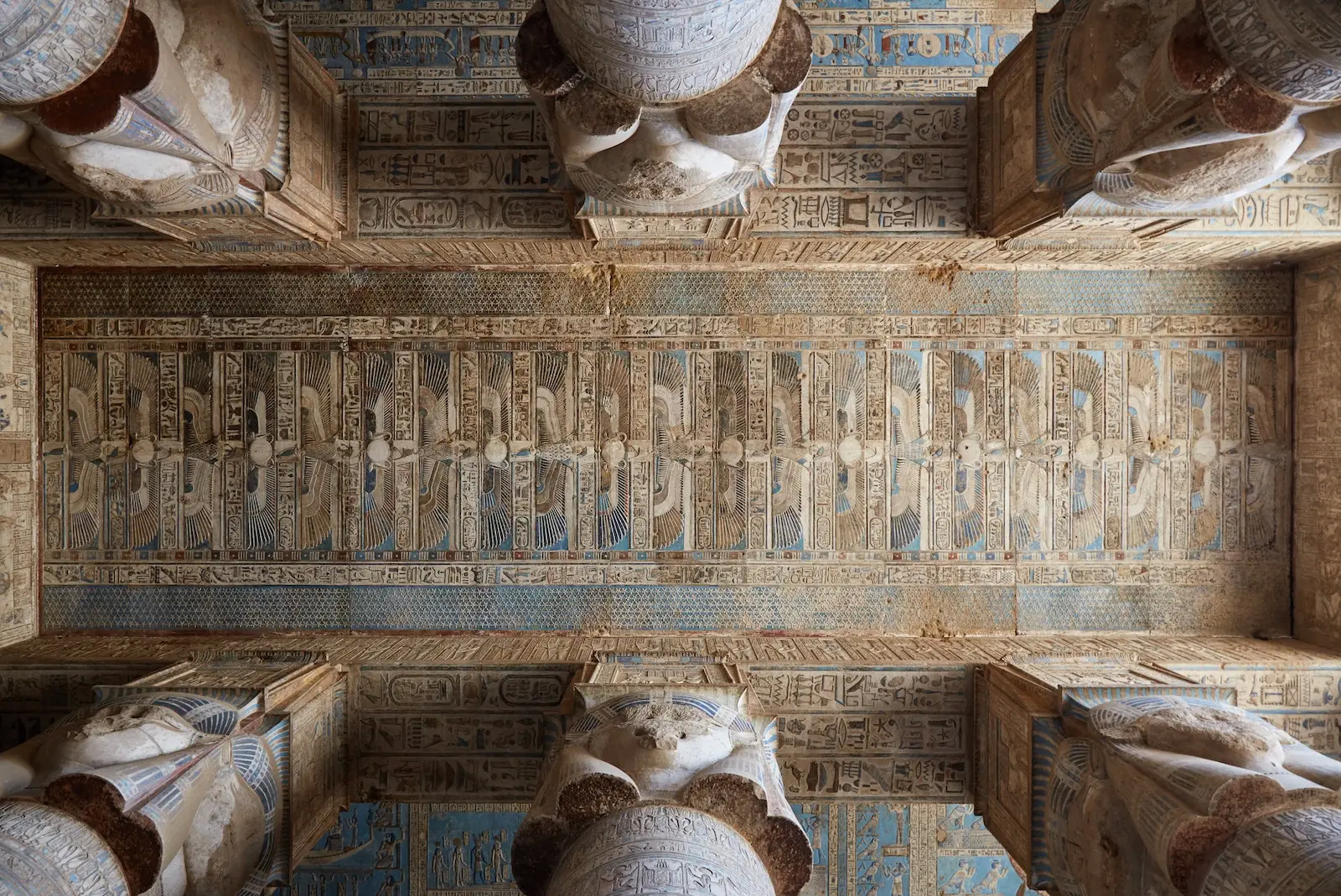
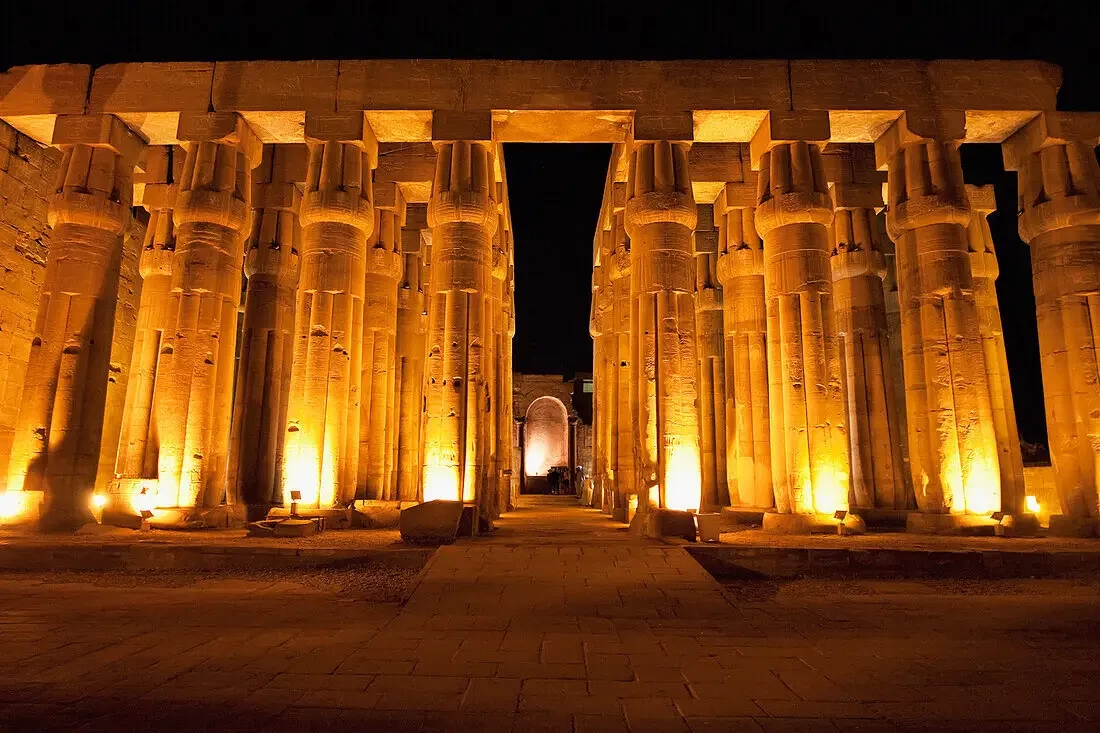
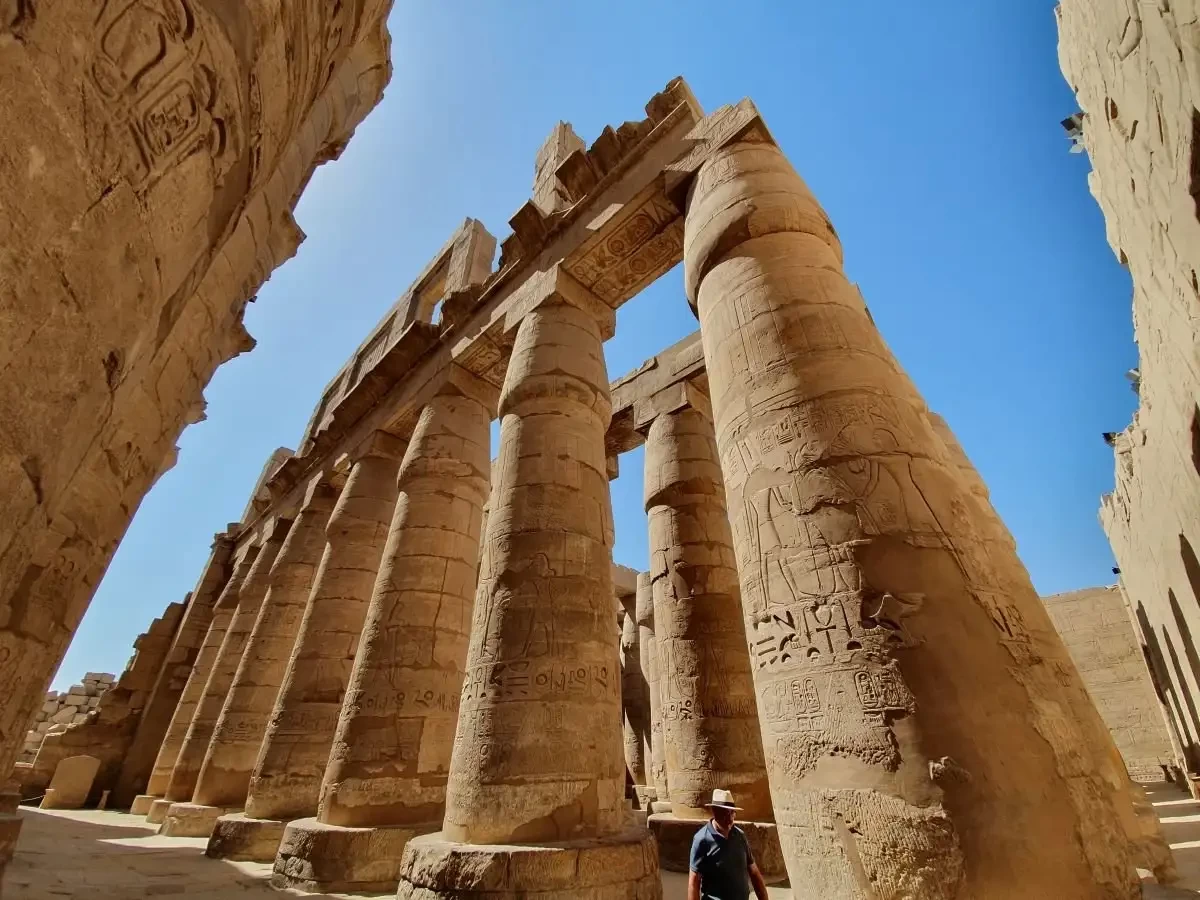
The Great Hypostyle Hall has large capitals decorated with Hathor’s head. Above them, the ceiling preserves colorful religious imagery.
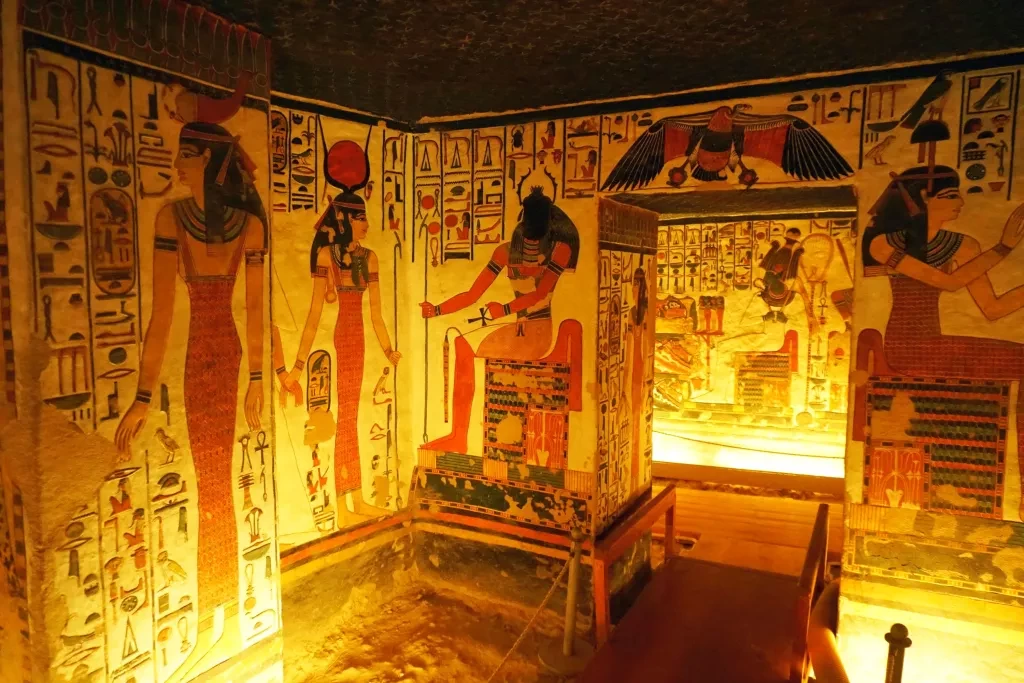
Wall scenes show Ptolemaic and Roman rulers making offerings to Egyptian gods. These rulers used Egyptian artistic traditions to connect their authority with the country’s religion.
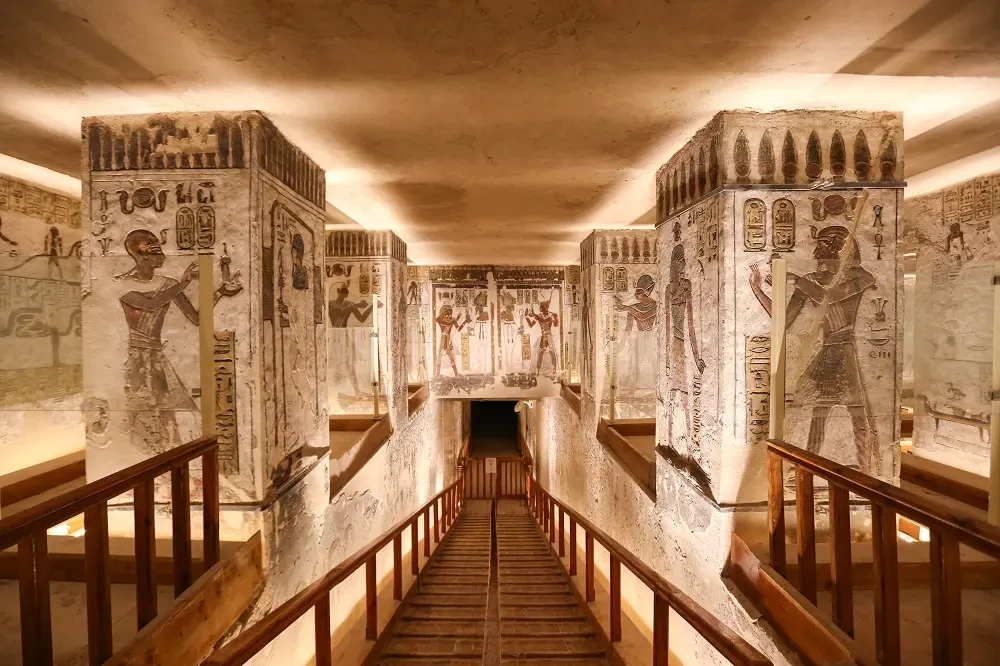
Images of deities, sacred rituals, offerings and myths accompany hieroglyphic inscriptions that explain the temple’s religious role and ceremonies.
The Dendera Zodiac and Ancient Egyptian Astronomy
The Dendera Zodiac is one of the complex’s best-known depictions of the sky. The original relief came from the ceiling of an Osiris chapel and is now exhibited in the Louvre in Paris; a replica is at Dendera.
Its circular composition combines Egyptian religious symbolism with astronomical imagery reflecting Greco-Roman influences. Constellations, planets and zodiac signs show how the sky was represented in this period.
Astronomy was closely connected to Egyptian religion, calendars, rituals and beliefs about the gods and the afterlife. Dendera’s ceiling decoration illustrates the relationship between astronomy and mythology.
The zodiac is not the temple’s only celestial depiction. Other ceilings and reliefs help visitors explore the connections between the sky, religion and earthly life.
Exploring the Chapels, Crypts and Hidden Corners
The center piece of Dendera Temple Complex is no doubt the Temple of Hathor, but there are a lot more places to explore once you get there. There are chapels and shrines, reliefs and the crypts in addition to more buildings which all contributed to form this complex temple. A visit of the complex usually goes through most of the places I mentioned.
The crypts are however, fascinating as they are tight chambers within the temple’s structure which are dedicated to specific rituals, treasures or sacred practices.
In these areas, we have engravings that allow visitors to understand much about the day to day temple rituals which could otherwise go unnoticed. There is also a mammisi (birth house) which was popular with the Roman’s too and is closely linked to the cults relating to Hathor’s life like birth of god Horus. Those in love with history should visit this place taking their time not to miss tiny details in their work of art, which usually have more to say of Egyptian myth, divine works, kingly acts and Hathor's cult. It does feel like on an adventure looking at details of such work rather than having a stop for tourists.
Those interested in Ancient Egyptians and ancient rituals have lots of things to find if you look through this complex closely even at areas apart from the celebrated facade of Hathor temple or the famous zodiac on the ceiling.




 More traveler reviews