FR
 IT


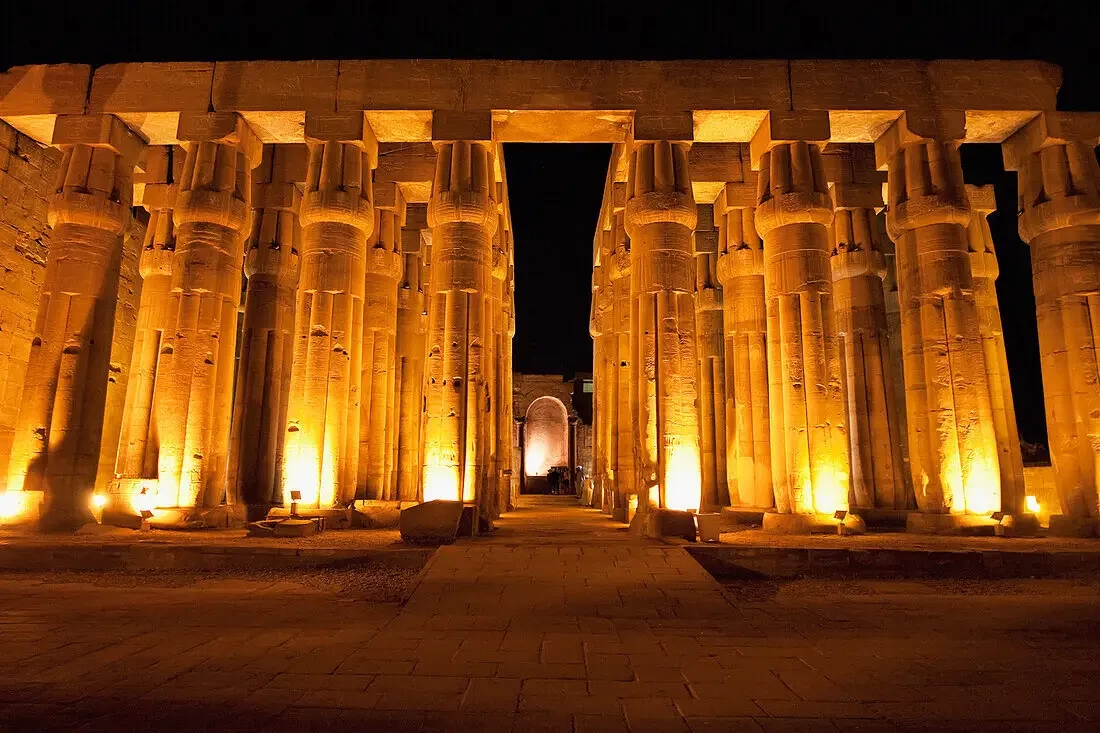
Luxor Temple at Night: Experience Ancient Thebes After Dark
A nighttime visit reveals a different side of Luxor Temple. As darkness falls, lighting brings its monumental pylons, statues, columns and decorated walls into focus in the heart of the city. The cooler evening also offers opportunities to photograph the ancient architecture, making the temple a memorable highlight of Luxor tours.
Luxor Temple at Night: A Magical Side of Ancient Thebes
Luxor temple becomes quite another place when the darkness falls. Although it can be admired for its massive columns, statues, and hieroglyphs in the daytime, the ruins illuminated against the dark sky offer even more atmosphere at Luxor Temple at night. It is situated on the East Bank of the Nile, and it is one of the main landmarks of Luxor and the ancient city of Thebes.
Luxor Temple should be distinguished from other Egyptian temples that were constructed mostly as enclosed spaces for performing religious rituals. It is closely connected with the ceremonies performed by pharaohs such as Amenhotep III and Ramesses II, and its history includes various styles of architecture of different eras.
It can become especially interesting for travelers to visit Luxor Temple at night, because this way it is possible to enjoy the attractions of Luxor without the daytime heat. The illuminated pylons, statues, courtyards, and columns can be seen very well and can serve as perfect sights for tourists interested in photos.
The Ancient History of Luxor Temple
Luxor Temple was central to the political and religious life of ancient Thebes. Much of the complex was built under Amenhotep III, with later rulers adding to and modifying it.
Ramesses II contributed several prominent features, notably the great entrance and large statues before the temple. Work associated with other pharaohs adds further layers to its history.
The temple was closely connected with the renewal of kingship and the annual Opet Festival. Sacred images of the Theban gods traveled from Karnak to Luxor Temple in a ceremony expressing the relationship between the king, the gods and Egypt’s well-being.
Its setting in Thebes, one of Egypt’s most important cities and a major religious center during the New Kingdom, adds to its significance.
Understanding these functions enriches an evening visit. The illuminated ruins are more than an atmospheric backdrop: they were settings for religious rites, royal ceremonies and historic events.
What to See Inside Luxor Temple at Night
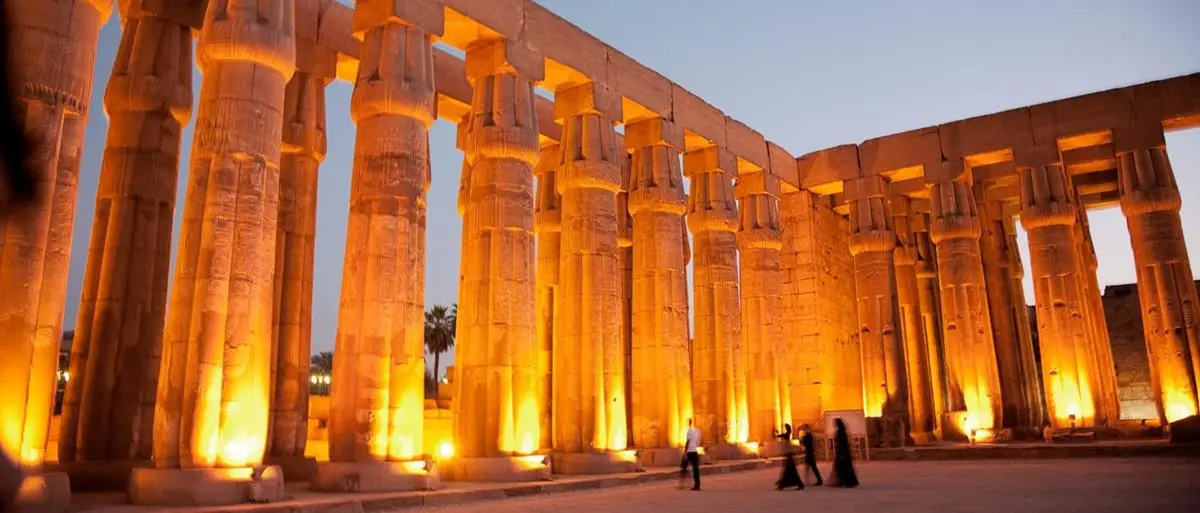
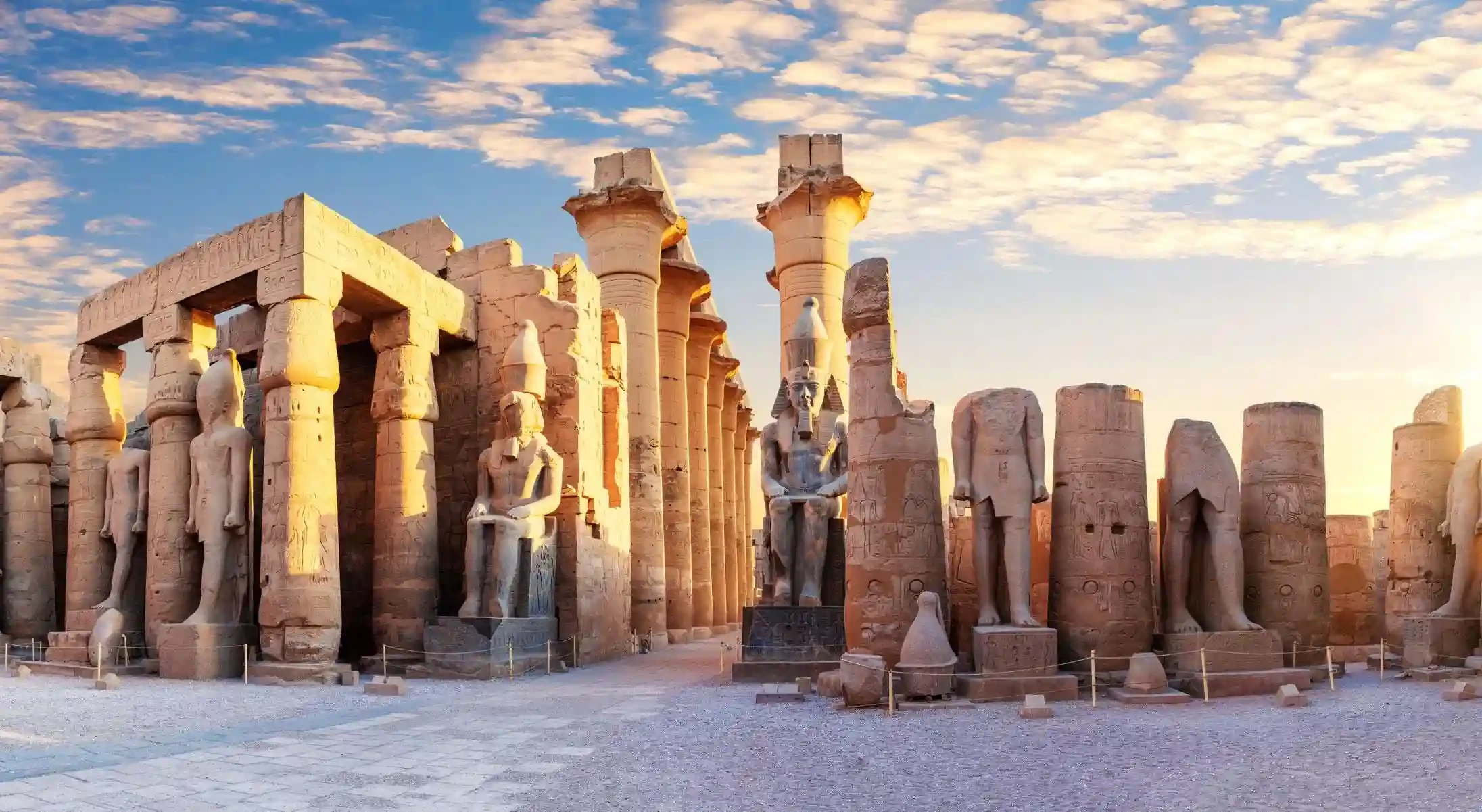
The nighttime visit extends beyond the entrance. Past the first pylon, statues of Ramesses II lead toward the temple’s courtyard, with architectural details highlighted by the lighting.
The Great Court of Ramesses II is particularly impressive. Its surrounding columns and statues create a powerful sense of space, enhanced after dark. The tall columns of Amenhotep III’s Colonnade lead farther into the temple.
The complex also contains a structure from a later era: the Mosque of Abu Haggag, built above the ancient temple.
Carved inscriptions and reliefs cover the walls, including scenes of kings making offerings to the gods.
Combining Luxor Temple with an Evening in Luxor
Luxor Temple could quite easily form a part of a bigger tour in Luxor for the evening. As the temple is located on the East Bank, one could combine sightseeing with a walk through the center of Luxor, dining at local restaurants, and walking along the Nile River.
One must also remember that Luxor Temple has connections with Karnak Temple through the historic Avenue of Sphinxes. While one might not be able to walk the whole way between Karnak and Luxor temples due to restoration work, the knowledge of the historic connection between the two places would give additional information.
It is also possible to schedule sightseeing at both Karnak Temple and Luxor Temple within a single day. One could visit Karnak Temple when it is light and then see Luxor Temple in the evening after dark.




 More traveler reviews