FR
 IT


A Journey Through the History of Kom Ombo Temple
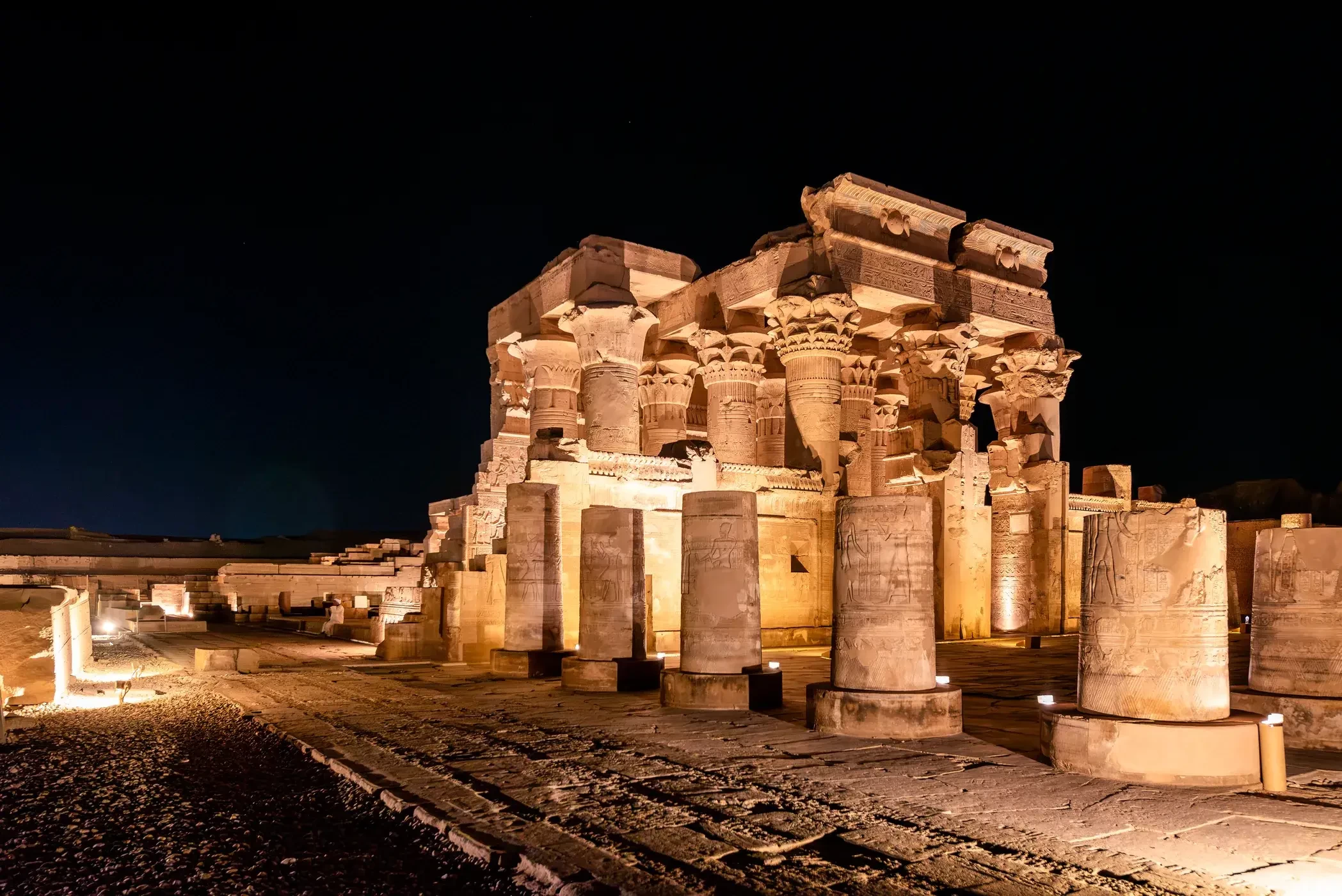
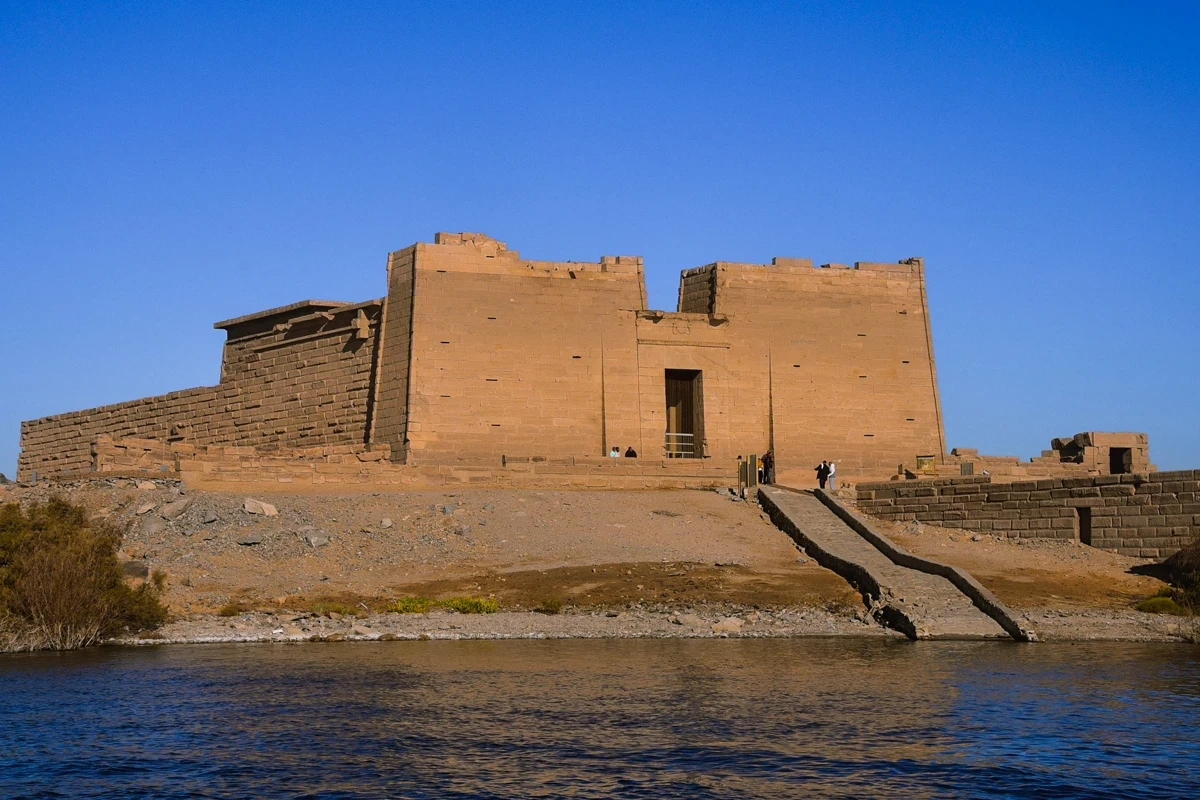
Kom Ombo Temple is a distinctive ancient Egyptian monument on the Nile’s east bank near the town of Kom Ombo. It is known for its unusual double layout and dedication to Sobek and Horus the Elder.
Its riverside location makes it a popular stop on journeys between Aswan and Luxor. Reliefs, columns and religious symbolism reveal ancient beliefs and architectural traditions.
For travelers exploring Aswan attractions, Kom Ombo combines an important shrine with Nile scenery.
What Is the History of the Temple of Kom Ombo?
The present temple was built largely during the Ptolemaic dynasty, beginning in the 2nd century BCE, with further work during the Roman period.
Its design centers on two deities. One side was dedicated to Sobek, the crocodile god associated with the Nile, fertility and protection; the other honored Horus the Elder, the falcon-headed god linked to kingship and the sky.
The riverside setting mattered because the Nile shaped daily life, farming, travel and religion. Kom Ombo became a center of worship and pilgrimage.
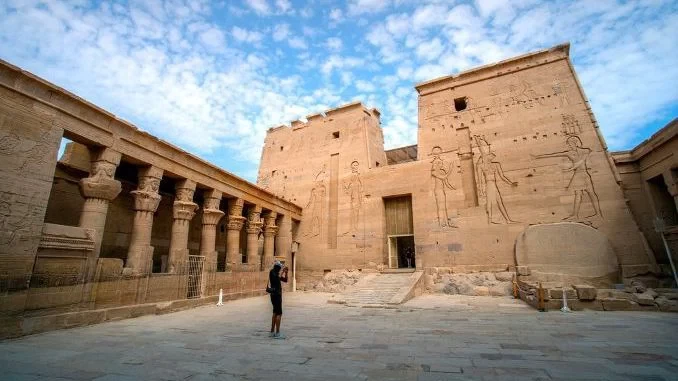
Over time, natural forces and changes in the river’s course damaged the temple. Surviving columns, reliefs and inscriptions still reveal the site’s history and religious customs.
These remains make Kom Ombo an important archaeological site for understanding Egyptian temple architecture during the Ptolemaic and Roman periods.
Why Was the Temple of Kom Ombo Dedicated to Sobek and Horus?
Kom Ombo’s dedication to two gods is reflected in its balanced halves, planned for the worship of Sobek and Horus the Elder.
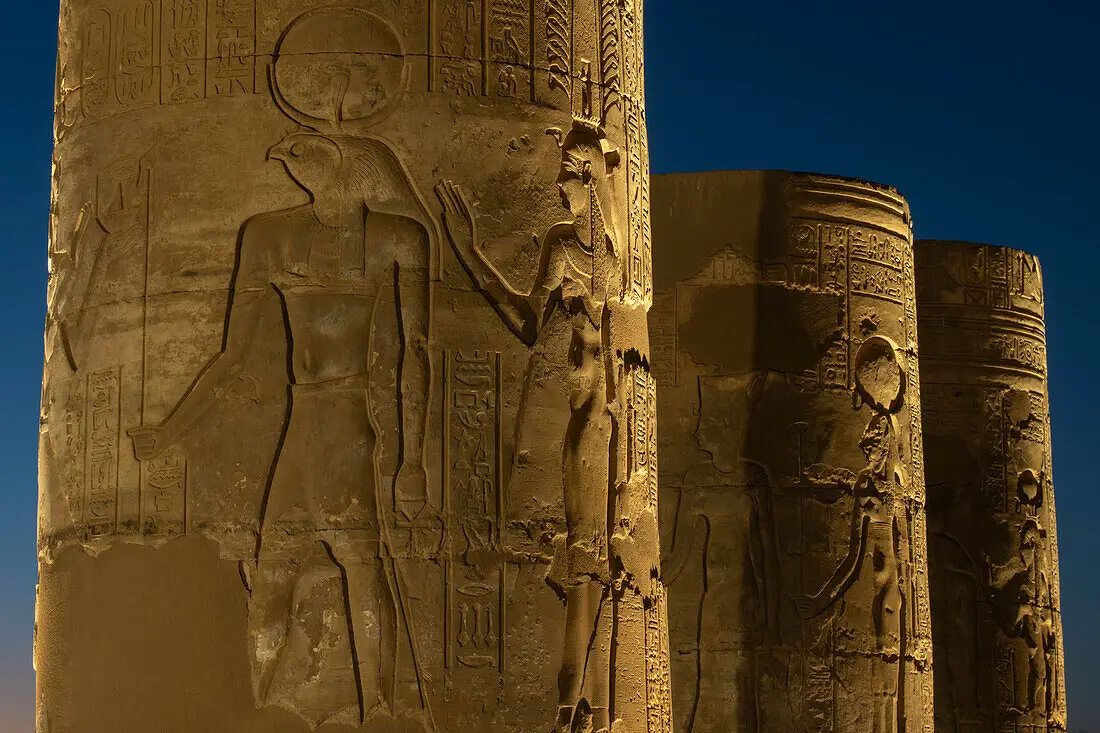
Sobek was depicted as a crocodile or a crocodile-headed man. Associated with the Nile, fertility, endurance, strength and protection, he was important to communities living alongside a river where crocodiles were regularly seen.
Horus the Elder, also called Horus the Great, was usually represented with a falcon’s head. His connection to the sky and divine kingship highlights the relationship between royal authority and religious practice.
The dual dedication shaped paired architectural features, including separate sanctuaries, halls, entrances and ritual spaces.
The temple therefore reveals not only architectural skill but also how different aspects of Egyptian belief could be brought together within a single sacred complex.
What Makes the Temple of Kom Ombo Unique?
Kom Ombo’s symmetrical layout is its defining feature, with two sections devoted to its principal gods.
Well-preserved reliefs depict deities, pharaohs, ceremonies and offerings, providing evidence of religious ideas and artistic practices.
Some carvings are associated with medicine and everyday practices. One well-known relief shows instruments often interpreted as surgical tools, prompting discussion of ancient medicine.
The temple is also linked to crocodile worship. Mummified crocodiles found in the surrounding region can be seen in the nearby Crocodile Museum, adding context to Sobek’s cult and the animals’ religious significance.
Views over the Nile complement the archaeological setting. Its architecture, mythology and unusual double design make Kom Ombo a distinctive destination in southern Egypt.
How Can You Visit the Temple of Kom Ombo?
The Temple of Kom Ombo sits roughly 45 kilometers north of Aswan, so it’s a pretty reachable place for travelers who are staying in Aswan. Since it lies right along the Nile, it also becomes a usual stop for many Nile journeys that run between Aswan and Luxor, which makes planning easier.
A really enjoyable approach is to visit while you are on a Nile Cruise. A lot of cruises include Kom Ombo, giving passengers time to wander around the temple first, then continue downstream.
You can also put the temple into a private Aswan tours, or join organized trips where Kom Ombo is paired with other ancient sites across southern Egypt.
Because the temple area is open and archaeological, it helps to wear comfortable clothing and use walking shoes that feel reliable. Bringing water, plus sun protection, is wise too. If you go earlier in the day, or in the cooler months, the overall viewing is noticeably more comfortable.
A visit to Kom Ombo can be especially rewarding when it is paired with wandering through other important sites around Aswan. When you see the temple while the Nile landscape is nearby and you also stop by nearby archaeological points, travelers often pick up a richer understanding of southern Egypt, history, and its culture.
If you are curious about ancient Egyptian history, religious mythology, architecture, or you just want some distinct things to do in Aswan, the Temple of Kom Ombo is well worth putting on your itinerary.





 More traveler reviews