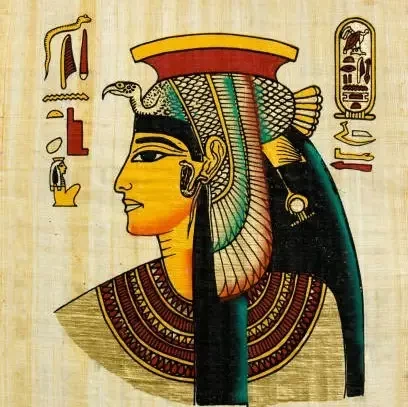
Cleopatra: Last Pharaoh of Egypt
Cleopatra VII was one of the most well known Egyptian rulers. She was also the final ruler of the Ptolemaic Kingdom of Egypt. The last active queen of Egypt, Cleopatra has been celebrated for her intelligence, charm, and political abilities.
Queen of Egypt Cleopatra was the daughter of the King of Egypt, Ptolemy XII, and the last ruler in the Ptolemaic dynasty. She was a monarch at the time of major revolutions, associated with the Roman Empire and with powerful Roman politicians like Julius Caesar and Mark Antony.
Cleopatra is also celebrated for her ties to Alexandria, which was one of the cultural and scholarly capitals of the ancient Mediterranean. The story of her life offers a glimpse into the rich traditions of Egyptian and Greek culture that defined Ptolemaic Egypt.
Today, travelers with an interest in ancient history, archaeology and Egypt's royal chronicles still visit the sites of Cleopatra's reign. Visiting the sites of the life of Cleopatra offers travelers a glimpse into another amazing aspect of Ancient Egyptian History.
Cleopatra: The Last Pharaoh of Ancient Egypt
Cleopatra VII is one of the most well-known figures of ancient Egypt. She was the final active ruler of the Ptolemaic Kingdom of Egypt, a kingdom in the ancient Mediterranean world.
Her story is linked with Alexandria, Egyptian antiquity, Roman policy and some of the most popular personalities of her era. Today, a journey to Cleopatra for the pilgrims of the land of pyramids, is a trip to the past to find the story behind the ancient stones.
Who Was Cleopatra?
Cleopatra VII Philopator was born in 69 BC and ascended to the throne of Egypt in 51 BC. Her family belonged to the Ptolemaic dynasty, a Greek-Macedonian royal family that took rule after Alexander the Great.
Though best known as an Egyptian queen, she was part of the Ptolemaic royal family, who all descended from Macedonian Greeks. Cleopatra ruled Egypt as a significant monarch who fought to keep her country free from Rome's expanding power.
She was known for her education and intelligence as well. Ancient writers connected her to being well-versed in many languages and having a love for Egyptian culture.
Cleopatra's Rise to Power
Cleopatra became queen alongside her younger brother Ptolemy XIII according to the customary custom for the Ptolemaic family.
During the beginning of her reign the court was in political flux. Cleopatra was expelled from the throne but later returned and sought help from the Roman Julius Caesar.
Supported by the Roman army, Cleopatra was restored to Egypt. She remained the ruler of Egypt through a time of great upheaval in the Roman empire.
Cleopatra and Julius Caesar
Her romance with Julius Caesar is perhaps the most famous incident in her reign. Caesar came to Egypt at the time of the civil war between Cleopatra and Ptolemy.
Cleopatra forged an alliance with Caesar to regain her throne. They had a son together, who was also known as Ptolemy XV Caesar.
Cleopatra later followed Julius Caesar to Rome where she stayed until she had to leave after his death in 44 BC.
Cleopatra and Mark Antony
Following the death of Julius Caesar, Cleopatra was closely associated with Mark Antony, one of the most powerful Roman rulers.
They had a personal and political relationship. Antony and Cleopatrajoined together and these political alliances flared up their own personal affair.
Their increasing antagonism towards Octavian (later called Augustus) ultimately resulted in a large-scale war between their armies and that of Octavian.
Cleopatra and the Battle of Actium
Actium in 31 BC is the most significant event in the history of Cleopatra.
Octavian's ships defeated Cleopatra's fleet at a large naval battle near Actium, Greece. This victory by Octavian undermined the power of Antony and Cleopatra, and made Egypt subject to Rome.
After their loss, Cleopatra and Antony went back to Egypt. Things got worse for them as Octavius was already marching into Egypt.
Death of Cleopatra and the Conclusion of Ptolemaic Egypt
30 BC, Octavian entered Alexandria. Mark Antony died just before Cleopatra. Cleopatra also died in the same year.
For years, there has been speculation surrounding the exact method of demise of Cleopatra. Most ancient stories link her death to a venomous snake, but details are hazy.
At Cleopatra's death, Egypt was divided into a Roman province. With her death, the Ptolemaic Kingdom and the last remaining ancient Hellenistic kingdom of Egypt came to an end.
Cleopatra and Alexandria
Alexandria played a central role in Cleopatra’s life and the Ptolemaic Kingdom. Founded by Alexander the Great, the city became one of the most important centers of culture, learning, and trade in the ancient Mediterranean.
Cleopatra ruled from Alexandria when the city was an important political and cultural hub. Alexandria's prominence due to its association with the Ptolemaic dynasty also make it a significant destination for those wishing to follow in the footsteps of Cleopatra.
Now, today, visitors to Alexandria can visit their various archaeological and historical sites linked to Alexandria's ancient history.
Cleopatra's Connection to Ancient Egyptian Culture
Despite being a Ptolemaic, Cleopatra attempted to associate herself with the traditional Egyptian culture and religion.
She identified with the Egyptian goddess Isis and billed herself as a ruler who knew and appreciated Egyptian custom.
By embracing Egyptian royal symbolism she was able to support her claim to be queen of Egypt and to associate her Ptolemaic monarchy with the traditions of Egypt.
Cleopatra's Legacy in Ancient Egyptian History
The period during which Cleopatra lived was one of transition from the Hellenistic world to Roman domination in Egypt.
Her life story is a mix of Egyptian, Greek and Roman history, which is why studying ancient Egypt through her life will prove so fascinating.
Cleopatra's kingdom was ultimately absorbed into the Roman Empire but her name has lived for over 2,000 years. It still inspires historians, authors, filmmakers and travelers eager to know more about the history of Egypt.
Explore Cleopatra’s Egypt
Experiencing Cleopatra is a chance to experience another slice of Egyptian history. Rather than a list of glorious pharaohs, Cleopatra's story highlights the intriguing political and cultural context of Ptolemaic Egypt.
Cleopatra is Just the Beginning Heading from Alexandria along the road to ancient sites throughout Egypt, this history of Cleopatra will set the scene for your journey through the fascinating history of Egypt with Egypt Tours.
Table of Contents
- 1- Cleopatra: The Last Pharaoh of Ancient Egypt
- 2- Who Was Cleopatra?
- 3- Cleopatra's Rise to Power
- 4- Cleopatra and Julius Caesar
- 5- Cleopatra and Mark Antony
- 6- Cleopatra and the Battle of Actium
- 7- Death of Cleopatra and the Conclusion of Ptolemaic Egypt
- 8- Cleopatra and Alexandria
- 9- Cleopatra's Connection to Ancient Egyptian Culture
- 10- Cleopatra's Legacy in Ancient Egyptian History
- 11- Explore Cleopatra’s Egypt