-webp.webp "How Did the Ancient Egyptians Build the Pyramids?")
-webp.webp "How Did the Ancient Egyptians Build the Pyramids?")
Discover how the Ancient Egyptians Built the Pyramids
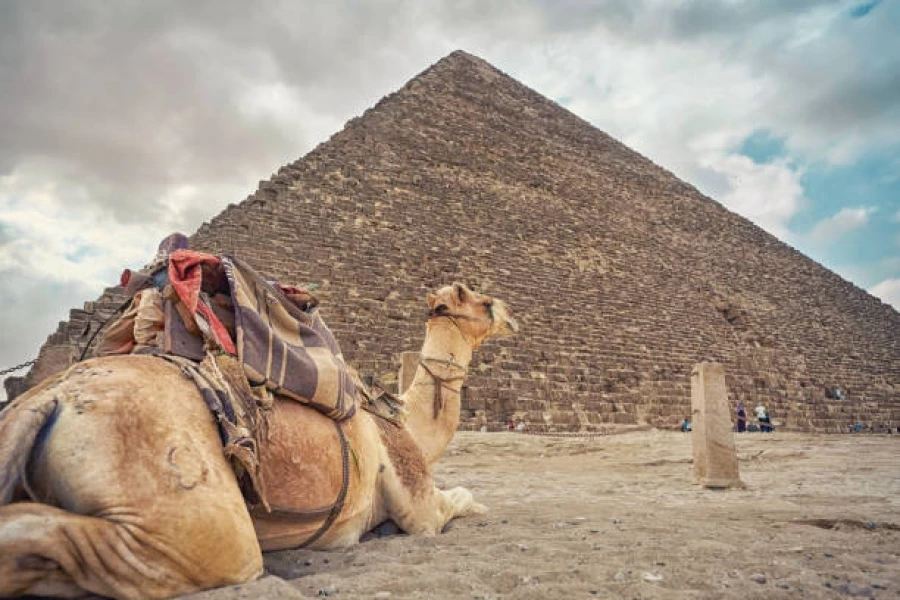
The pyramids of ancient Egypt have fascinated people for thousands of years. Building these huge structures was a massive task, especially without the machines and equipment we have today. The Great Pyramid of Giza was built for Pharaoh Khufu during the Fourth Dynasty and is the largest of the three main pyramids at Giza.
So how did the ancient Egyptians build the pyramids without modern cranes, trucks or other heavy machinery? Archaeological evidence shows that pyramid construction depended on practical engineering, quarrying, transportation, ramps, skilled craftsmanship and large organized workforces rather than a single construction technique.
Why Did the Ancient Egyptians Build the Pyramids?
Pyramids were primarily built as royal funerary monuments. The ancient Egyptians believed that the king existence continued after death, so his burial complex had to provide a place for his body and support the rituals connected with his afterlife.
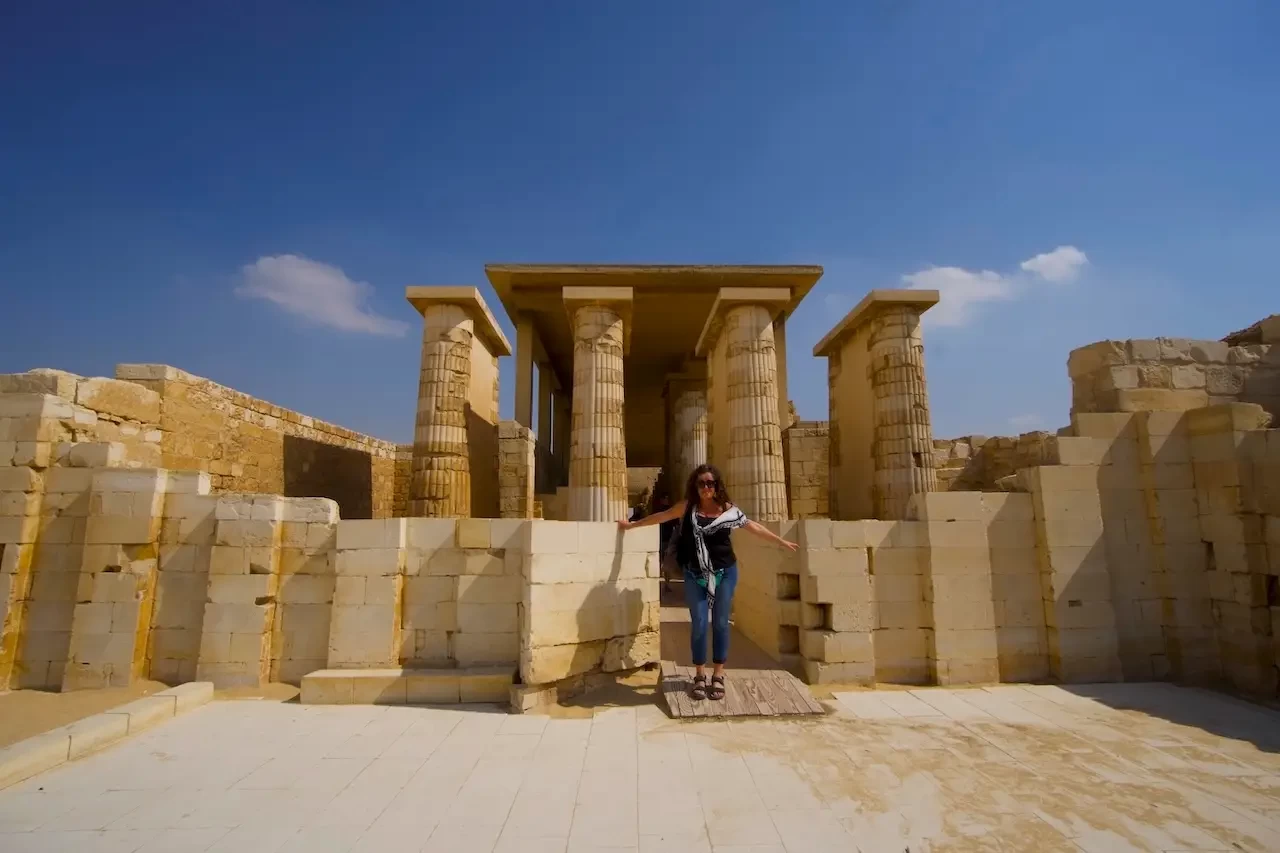
During the Old Kingdom, pyramid complexes became increasingly organized. A typical complex could include the pyramid itself, a funerary temple, a valley temple and a causeway connecting different parts of the complex. The layout and design changed over time, but these elements became an important part of royal burial architecture.
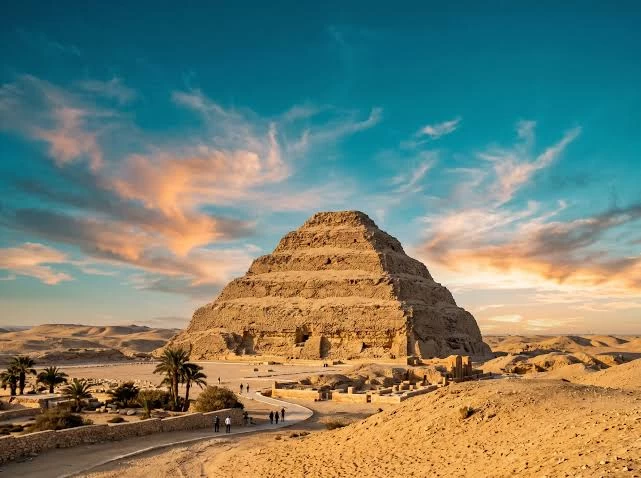
The history of pyramid construction also shows how Egyptian architecture developed. Earlier monuments, such as the Step Pyramid of Djoser at Saqqara pioneered the use of stone on a large, monumental scale and later kings tried out a variety of different pyramid layouts before the even more familiar smooth-sided pyramids of the Fourth Dynasty came into their full form.
This development is an important part of Ancient Egyptian History and helps explain why pyramids were not built using exactly the same methods throughout Egyptian history.
How Did Egyptians Quarry and Move the Stone?
One of the biggest challenges was obtaining and transporting the enormous amount of stone needed for construction. Limestone was widely used for pyramid construction while harder stones such as granite were used for important internal chambers and architectural elements.
Workers extracted stone from quarries using tools and techniques suited to the materials available at the time. Large blocks then had to be transported to the construction site. The Nile played an important role in moving heavy materials over long distances, connecting quarries and building sites across Egypt.
Evidence from Egyptian construction projects shows that stone and other materials could be transported by water and then moved over land. The Metropolitan Museum, for example, notes that a massive granite column used in the pyramid complex of Sahure was quarried at Aswan and transported more than 500 miles downstream to the Memphite region.
On land, workers could move heavy blocks using sledges and other simple mechanical methods. Wetting the sand in front of a sledge may also have reduced resistance, although the exact techniques used for every pyramid are not known.
How Were the Pyramid Stones Lifted and Placed?
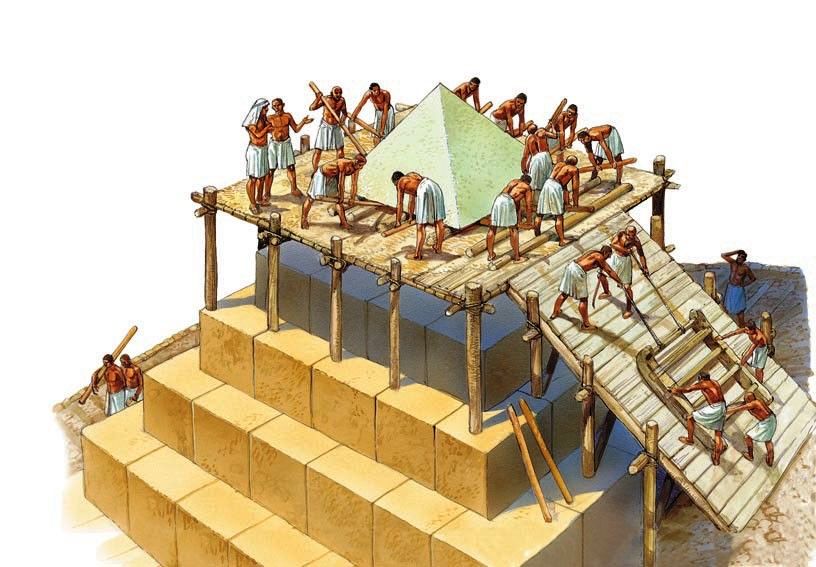
One of the biggest questions about how the pyramids were built is how workers raised massive blocks as the pyramid became higher. Archaeologists have found evidence of construction ramps at pyramid sites, including Dahshur, showing that ramps were part of ancient Egyptian building practices.
The exact design of the ramps used at Giza remains uncertain. Different possibilities have been proposed, including straight ramps, zigzagging ramps, and systems that may have changed as construction progressed. There is no one surviving plan that indicates the specific construction techniques used to build the Great Pyramid.
As the pyramid grew builders had to carefully position each block and maintain the monument's shape and alignment. This required surveying, measurement, planning, and coordination between different groups of workers.
The final outer surface of many pyramids was originally covered with smooth limestone casing stones. These gave the pyramid a much more polished appearance than the rough stone surfaces visible today.
Who Built the Egyptian Pyramids?
The idea that the pyramids were built entirely by enslaved people is not supported by the archaeological evidence available today. Excavations around the Giza pyramids have revealed evidence of organized settlements and facilities connected with the people who worked on the royal construction projects.
Building a pyramid required many different types of workers. Stonecutters, quarry workers, transporters, craftsmen, supervisors, laborers, and other specialists all had different roles in the enormous construction process.
Pyramid building was also part of a wider state-organized system. Food, tools, materials and labor had to be coordinated over many years. The large-scale organization visible in Old Kingdom pyramid complexes reflects the centralized administration of ancient Egypt.
The workers were not simply moving stones without a plan. The construction of a pyramid involved architects, surveyors, craftsmen and teams responsible for different stages of the project. Other evidence from Egyptian building sites points to the existence of teams and semi-permanent worker settlements around large royal construction projects.
How Did the Egyptians Make the Pyramids So Accurate?
The accuracy of the pyramids is one of the most impressive aspects of ancient Egyptian construction. Builders had to establish a stable foundation, maintain straight sides and carefully align the structure as it rose.
The Egyptians had practical knowledge of surveying, measurement, geometry, and construction. They could use simple tools to establish levels and angles and to keep walls and surfaces aligned.
The Great Pyramid wasn’t just an isolated structure. It was part of a carefully planned funerary complex. The temples around it, the causeway and the other buildings were all placed according to a larger architectural plan. You can see the same kind of planning in other pyramid complexes throughout Egypt.
So the pyramids were the product of generations of architectural experience. Earlier projects gave Egyptian builders the chance to experiment with different designs and construction techniques. By the Fourth Dynasty pyramid construction had reached a highly developed stage and the pyramids of Giza are some of the most ambitious examples.
Today visitors can explore this architectural legacy at the Giza Pyramids, where the Great Pyramid of Khufu, the Pyramid of Khafre and the Pyramid of Menkaure remain among important ancient monuments.
The question of how did the ancient Egyptians build the pyramids does not have one simple answer. Their achievements depended on quarrying, transportation, ramps, surveying, engineering, skilled craftsmanship and the organization of large workforces over many years.
Although some details of the construction process remain uncertain, archaeological evidence gives us a much clearer picture of the methods and organization behind these monuments. The pyramids were not built with modern machinery but through careful planning and the accumulated engineering knowledge of ancient Egyptian civilization.