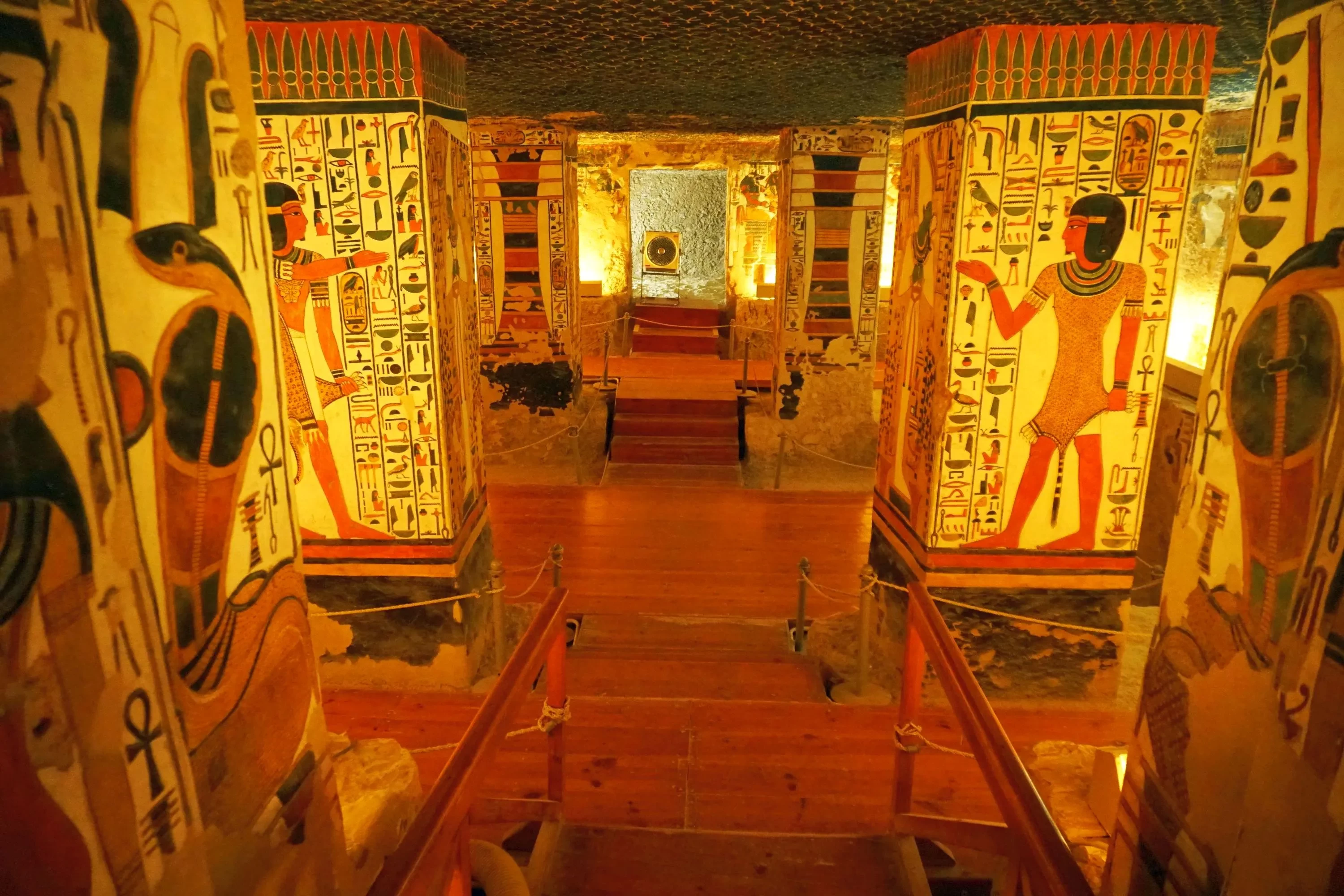
Hatshepsut: Egypt’s Female Pharaoh
Hatshepsut was one of the most famous female monarchs of ancient Egypt. She was a pharaoh of Egypt during the 18th Dynasty of the New Kingdom period and became well known for her achievements and her temples.
You might be interested in her connection to the stunning Mortuary Temple of Hatshepsut at Deir el-Bahari in Luxor. Facing on the striking cliffs of limestone, this extraordinary structure provides a view of her kingdom and the art of Egypt.
Learn about Hatshepsut, her life, her legacy, discover the places connected with her reign and find out more about Ancient Egyptian History and the ancient Egyptian pharaohs.
Hatshepsut: The Female Pharaoh of Ancient Egypt
Hatshepsut was one of the most remarkable women in Egyptian history. Hatshepsut was a 18th Dynasty ruler of the New Kingdom of Ancient Egypt noted for her successful rule, monumental building projects and her association with Egyptian religion.
Her impact is still felt today, in particular at the stunning Hatshepsut Temple which stands at Deir el-Bahari in Luxor. Discovering her story provides guests with a fascinating insight into the power, culture, architecture and traditions of ancient Egypt.
Who Was Hatshepsut?
Hatshepsut was an ancient Egyptian aethor whose rule made her a pharaoh of the 18th Dynasty. She was a royal princess, a daughter of King Thutmose I and Queen Ahmose, and part of one of the most important royal family of the New Kingdom.
Following the death of her husband, Thutmose II, Hatshepsut was regent for the young Thutmose III. Hatshepsut eventually adopted the role of pharaoh and reigned Egypt for an extended period.
Hatshepsut one of the most successful female rulers of ancient Egypt.
Hatshepsut's Rise to Power
Hatshepsut's career as pharaoh was related to the royal succession of the 18th Dynasty. Thutmose the second died and Thutmose the third who was a son was the designated heir; though he was too young.
Hatshepsut started out as regent. She gradually took on the full titles and symbols of a king and presented herself as a pharaoh.
Her reign is a reflection of the significant political position she had in the royal court and how the kingship of the Egyptian could be shown through the religious and royal imagery.
Hatshepsut as a Female Pharaoh
Hatshepsut is particularly famous because she was one of the few women in ancient Egypt to rule as pharaoh.
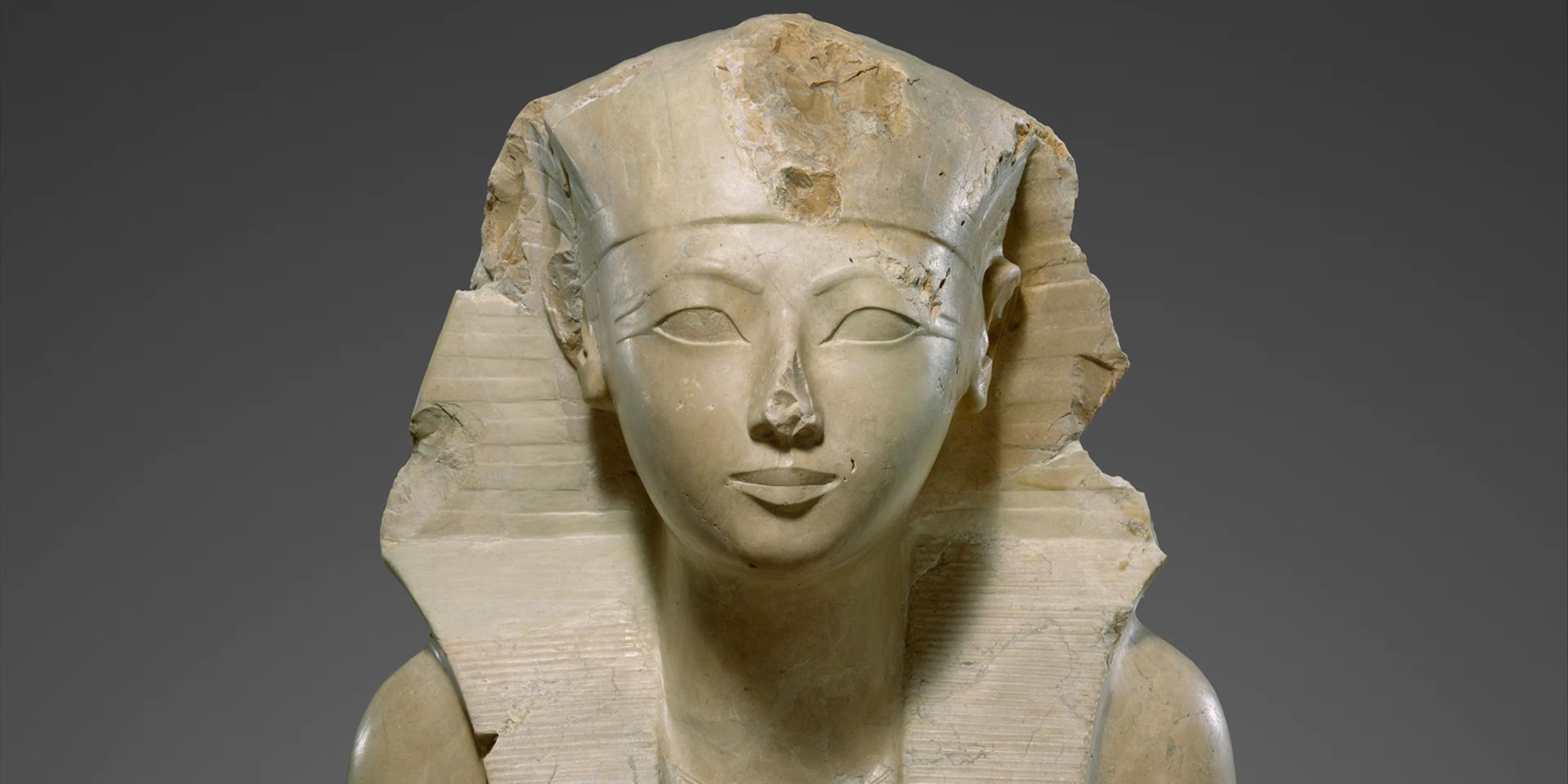
In official depictions, she was occasionally depicted wearing traditional royal attire and symbols of office associated with male pharaohs. Statues and reliefs depicted her as a proper ruler of Egypt.
She is therefore quite an important character in the history of ancient Egypt because of this blend of traditions of the royal family and her gender as a woman.
The Reign of Hatshepsut
The time of Hatshepsut's reign was a period of wealth and trade and it also marked a time of building. This did not mean military expansion, but Hatshepsut's reign was a time of religious and architectural building.
She ordered the building of temples, obelisks, statues and many other things all across Egypt. These were building projects which had the purpose of reinforcing her link to the gods, and her power as pharaoh.
Her reign is a significant period for understanding the political and cultural development of the New Kingdom.
Hatshepsut's Trading Expedition to Punt
The most famous event linked to Hatshepsut is her expedition to the Land of Punt.
Reliefs at her temple illustrate her expedition and returning ships bringing precious cargoes such as incense, trees, animals and other items.
The whole expedition shows how important trade was in her rule and helps us understand how much contact ancient Egyptians had with faraway lands.
The Temple of Hatshepsut at Deir el-Bahari
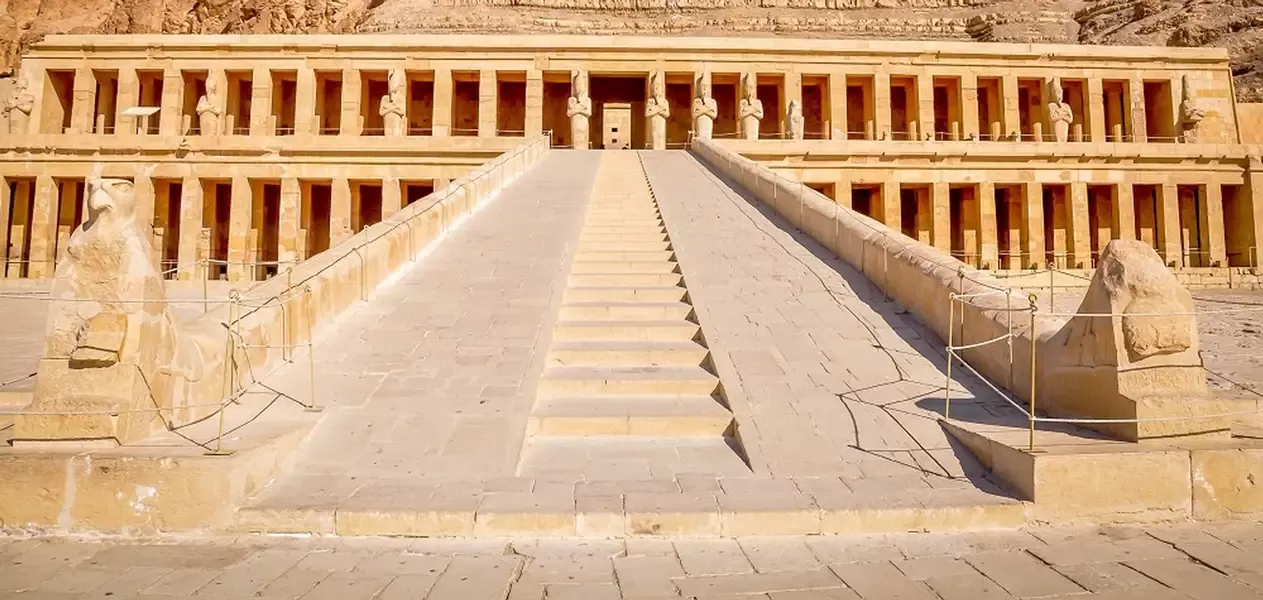 There is one monument from Hatshepsut's reign that is more well known than the others.
Nestled into the cliffs of Deir el-Bahari on the west bank of the Nile near Luxor, the temple features terraces, colonnades, statues, and reliefs that form one of the most visually striking architectural sites in Egypt.
This text makes it clear that the temple was entirely devoted to the gods, Amun being the main one, and also to Hatshepsut's divine right to be king.
Today, it is one of the most worth visiting historical attractions in Luxor West Bank.
Hatshepsut and Ancient Egyptian Religion
Religion was a significant aspect of the reign of Hatshepsut. She integrated her rule into the divine history of Egypt and used her interaction with the gods to strengthen her place of power.
Inscriptions and reliefs from her temple claim a divine birth, and show her reign was sanctioned by the gods.
This religious symbolism served to strengthen her legitimacy as a pharaoh and signaled the intimate relationship between religion and kingship in ancient Egypt.
Hatshepsut's Obelisks at Karnak
Hatshepsut added much to the Temple of Karnak at Luxor. Her most well known additions are the large obelisks that she had erected there.
One of her obelisks remains in place at Karnak and is still one of the tallest ancient Egyptian obelisks extant.
These monuments show her admiration for architecture and her wish to make a mark of her own on the religious capital of the ancient Thebes.
Hatshepsut and Thutmose III
One of the more interesting parts of Hatshepsut's story is her relationship with Thutmose III. Thutmose was her stepson and also the son of her younger sister.
While Hatshepsut was the regent, Thutmose III was still royal. Thutmose III went to become one of Egypt's most famous pharaohs.
Following the death of Hatshepsut, Thutmose III governed Egypt by himself and further perpetuated a lot of the New Kingdom patterns of construction and warfare.
The Legacy of Hatshepsut
Hatshepsut's Magnificent Monuments And Art At A Glance. The remarkable monuments of Hatshepsut – statues, inscriptions and temple reliefs – yield unique insights into her history and to the history of ancient Egypt.
Even though accounts of Hatshepsut's life were erased or altered in the years following her death, her story continued through excavations and studies.
And now, she is one of the most famous women in the ancient Egyptian history.
Explore the Story of Hatshepsut
Hatshepsut's tale gives us a new way to think about the past. She was a woman pharaoh who reigned during one of the most significant times in Egyptian history, and who built monuments that still lure tourists to Egypt today.
In the magnificent Temple of Hatshepsut to the Karnak monuments, marveling at her legacy is the perfect way to discover the architecture, the religion and the kingship of ancient Egypt.
Table of Contents
- 1- Hatshepsut: The Female Pharaoh of Ancient Egypt
- 2- Who Was Hatshepsut?
- 3- Hatshepsut's Rise to Power
- 4- Hatshepsut as a Female Pharaoh
- 5- The Reign of Hatshepsut
- 6- Hatshepsut's Trading Expedition to Punt
- 7- The Temple of Hatshepsut at Deir el-Bahari
- 8- Hatshepsut and Ancient Egyptian Religion
- 9- Hatshepsut's Obelisks at Karnak
- 10- Hatshepsut and Thutmose III
- 11- The Legacy of Hatshepsut
- 12- Explore the Story of Hatshepsut