Dendera Temple Complex: Discover the Temple of Hathor
The Dendera Temple Complex is undoubtedly one of the most interesting ancient Egyptian complexes that you should visit from Luxor. It is dedicated mainly to the Egyptian goddess Hathor, who is also associated with love, music, maternity, and happiness. The complex comprises a number of interesting things like columns, colorful reliefs, hieroglyphic inscriptions, chapels, crypts, and astronomy-related decorations. The remaining parts of the temple are predominantly of Ptolemaic and Roman ages while the complex itself has a much longer history. You will have a chance to see the unique Hathoric columns, examine decorated parts of the temple, and study such interesting things as the Dendera Zodiac or the sky of the ancient Egyptians. A Luxor tour is a great way to include this remarkable ancient site in your Egypt itinerary.
Dendera Temple Complex: Discover the Ancient Temple of Hathor
Dendera Temple Complex is among the most incredible ancient sites to visit coming from Luxor. Being located on the west bank of the Nile, north of the city, the complex is known for its amazingly well-preserved Temple of Hathor, the goddess of love, music, motherhood, joy and the sky. Unlike many other ancient structures which lack many elements due to being damaged, Dendera complex allows seeing impressive columns, reliefs, ceilings, entrances, and inscriptions which give an insight into the sophistication of ancient Egyptian temple architecture.
Although the major temple that visitors can see is dated back to the Ptolemaic and Roman period, the site itself is related to the worshiping of Hathor for a longer period of time. The carvings in the temple represent not only the traditions of the ancient Egyptian religious culture but also the influence of art from later periods.
For travelers visiting Luxor, Dendera gives an opportunity to visit another site besides the most famous temples in the city. In addition, it could be used as a day trip while visiting other places in Upper Egypt and is especially interesting for people who are into ancient religions and mythologies.
The Temple of Hathor and Dendera’s Sacred History
The main building located inside the Dendera complex is the Temple of Hathor, which is the primary attraction there. Hathor was one of the deities that had been popular throughout the whole history of ancient Egypt and was believed to represent love, music, motherhood, fertility, beauty, and joy. This made her cult exist for centuries before the temple, which can be seen today, had been built.
This temple mostly dates back to the Ptolemaic era, although some structures were built even during the Roman era. Even though this structure is relatively young, it still has much in common with other Egyptian temples because it follows the traditional architectural style and features numerous carvings on the walls and columns depicting various gods, offerings, rituals, and inscriptions written in hieroglyphics.
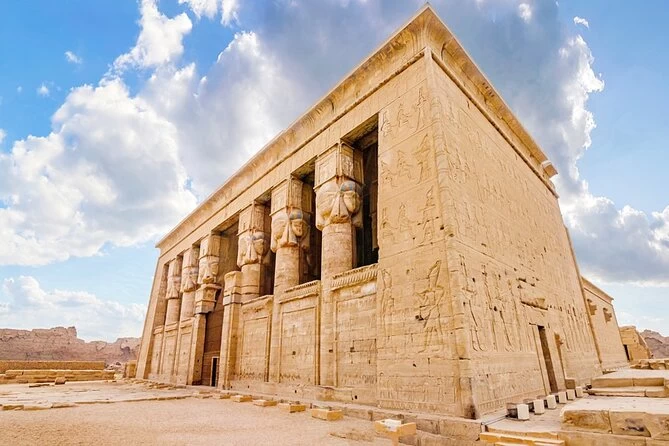
The most impressive part of the structure is its façade adorned with colossal figures of various deities. In the interior, visitors can admire the hypostyle hall with huge columns and Hathor-headed capitals.
Marvel at Dendera’s Columns, Reliefs and Ancient Artwork
Architectural features of the Dendera Temple Complex are among its most fascinating sights. When visitors get inside the main temple, they see massive columns, beautifully decorated walls, intricate inscriptions and reliefs preserved surprisingly well. The artistic level of the structures gives reason to visit Dendera especially for those people who appreciate Egyptian art and architecture.
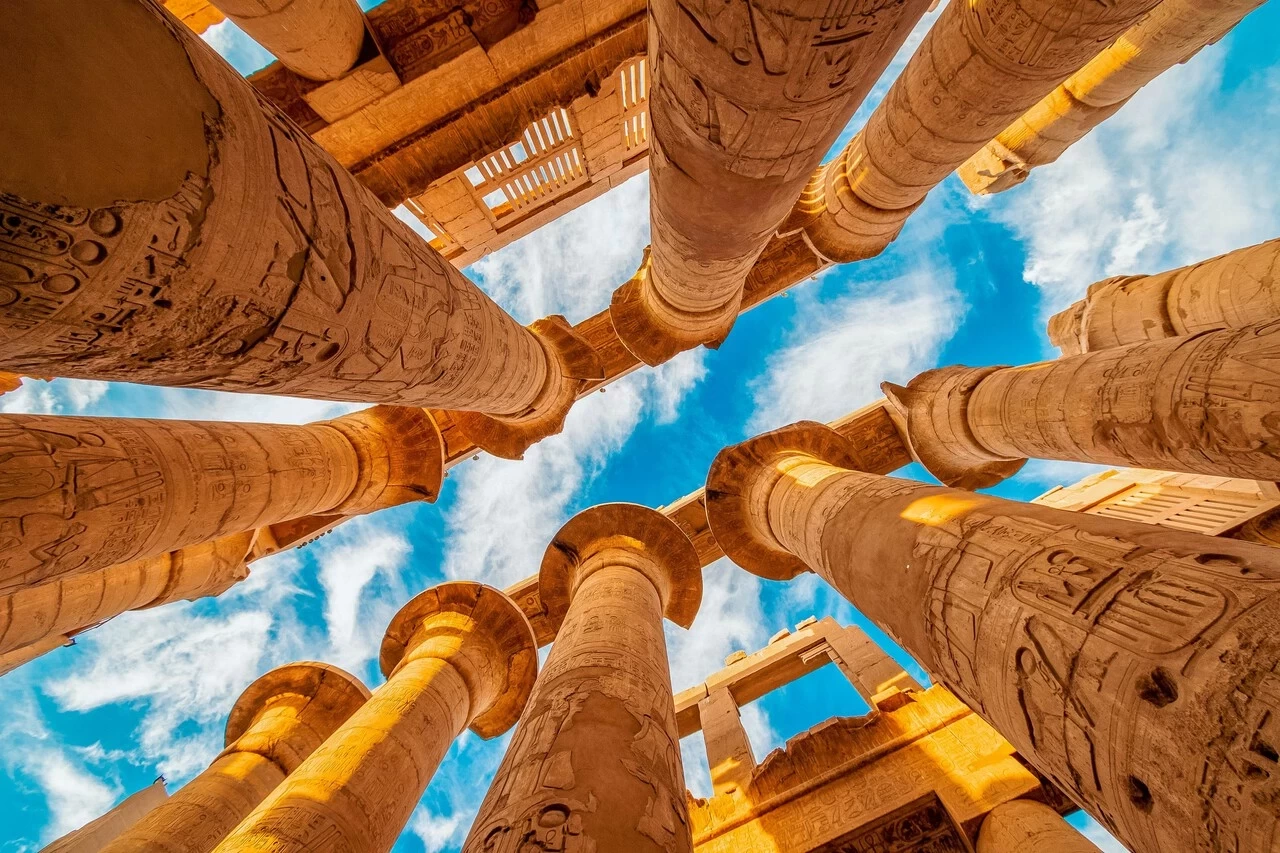
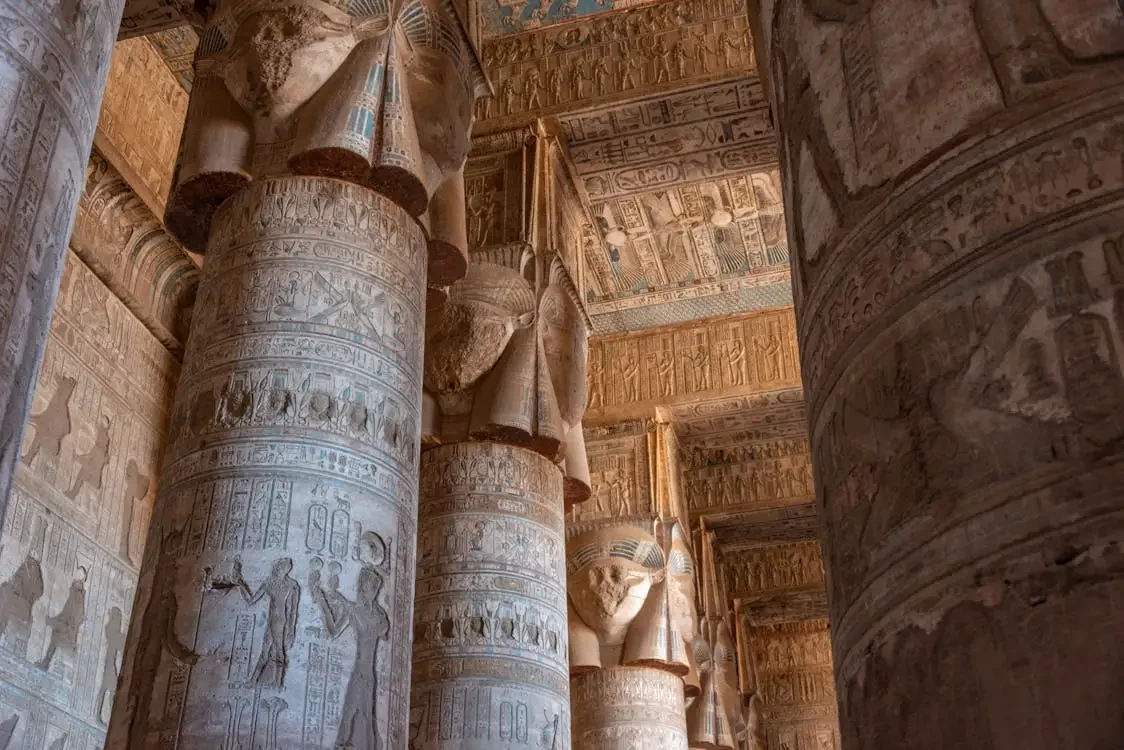
One of the most interesting spaces in the temple is Great Hypostyle Hall. In particular, columns in this hall have big capitals decorated with heads of Hathor – the goddess. On the ceiling above them, there are various religious images with bright colours.
The walls represent Ptolemaic and Roman rulers offering sacrifices to the Egyptian gods. Despite the fact that these rulers were not descendants of Egyptian royal family, they used artistic techniques of Egyptians to connect themselves with the religion of the country.
Inside the temple, people can find different images related to the gods, holy rituals, offering scenes and myths. Hieroglyphic inscriptions give more information about the religious role of the temple and its rituals.
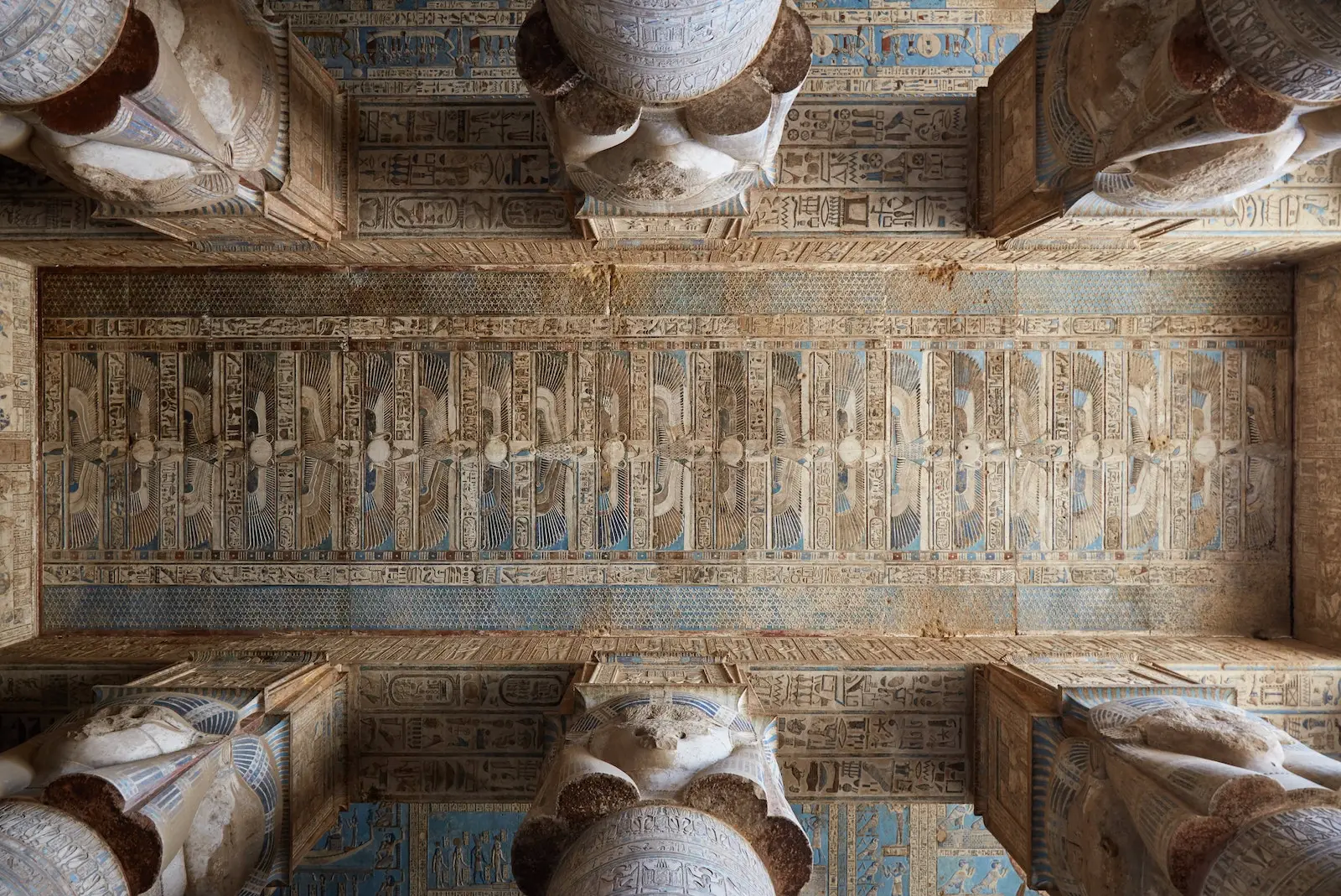
The Dendera Zodiac and Ancient Egyptian Astronomy
One of the most notable characteristics of the Dendera Temple Complex is the Dendera Zodiac, an exceptional depiction of the sky. The original relief was discovered on the ceiling of Osiris Chapel and is exhibited in Louvre Museum in Paris while the replica is available at Dendera.
The zodiac attracts attention because of its combination of Egyptian religious symbolism with the images from the field of astronomy reflecting the cultural impact of the Greco-Roman era. It is possible to see on the circular picture constellations, planets, and zodiac symbols as well proving the fact that ancient scientists depicted the sky.
Astronomy has been widely used by ancient Egyptians in their religious life. It helped to create calendars, organize rituals, and understand the nature of gods and the life after death. The decoration of the ceiling in Dendera proves that the connection between astronomy and mythology has been rather close.
However, the zodiac is not the only celestial depiction on the ceilings and reliefs of the temple. Thus, the visitors of the complex can not only look at its impressive columns but also analyze the relationship of the sky with religion and earthly life.
Exploring the Chapels, Crypts and Hidden Corners
The center piece of Dendera Temple Complex is no doubt the Temple of Hathor, but there are a lot more places to explore once you get there. There are chapels and shrines, reliefs and the crypts in addition to more buildings which all contributed to form this complex temple. A visit of the complex usually goes through most of the places I mentioned.
The crypts are however, fascinating as they are tight chambers within the temple’s structure which are dedicated to specific rituals, treasures or sacred practices.
In these areas, we have engravings that allow visitors to understand much about the day to day temple rituals which could otherwise go unnoticed. There is also a mammisi (birth house) which was popular with the Roman’s too and is closely linked to the cults relating to Hathor’s life like birth of god Horus. Those in love with history should visit this place taking their time not to miss tiny details in their work of art, which usually have more to say of Egyptian myth, divine works, kingly acts and Hathor's cult. It does feel like on an adventure looking at details of such work rather than having a stop for tourists.
Those interested in Ancient Egyptians and ancient rituals have lots of things to find if you look through this complex closely even at areas apart from the celebrated facade of Hathor temple or the famous zodiac on the ceiling.