Explore the History and Architecture of Edfu Temple
Take a close look at Edfu Temple in Aswan; it’s one of the best-preserved ancient Egyptian temples, and also a notable monument to Horus. Here you can learn the older story of the site, see the Ptolemaic architecture, notice the detailed hieroglyphic inscriptions, walk through sacred halls, and spend time with impressive relief carvings, all while you absorb the religious traditions of ancient Egypt. People also make Edfu Temple a very common stop on Nile Cruise trips between Luxor and Aswan, so it becomes an important destination for travelers chasing Egypt’s ancient heritage.
What Can You See Inside Edfu Temple?
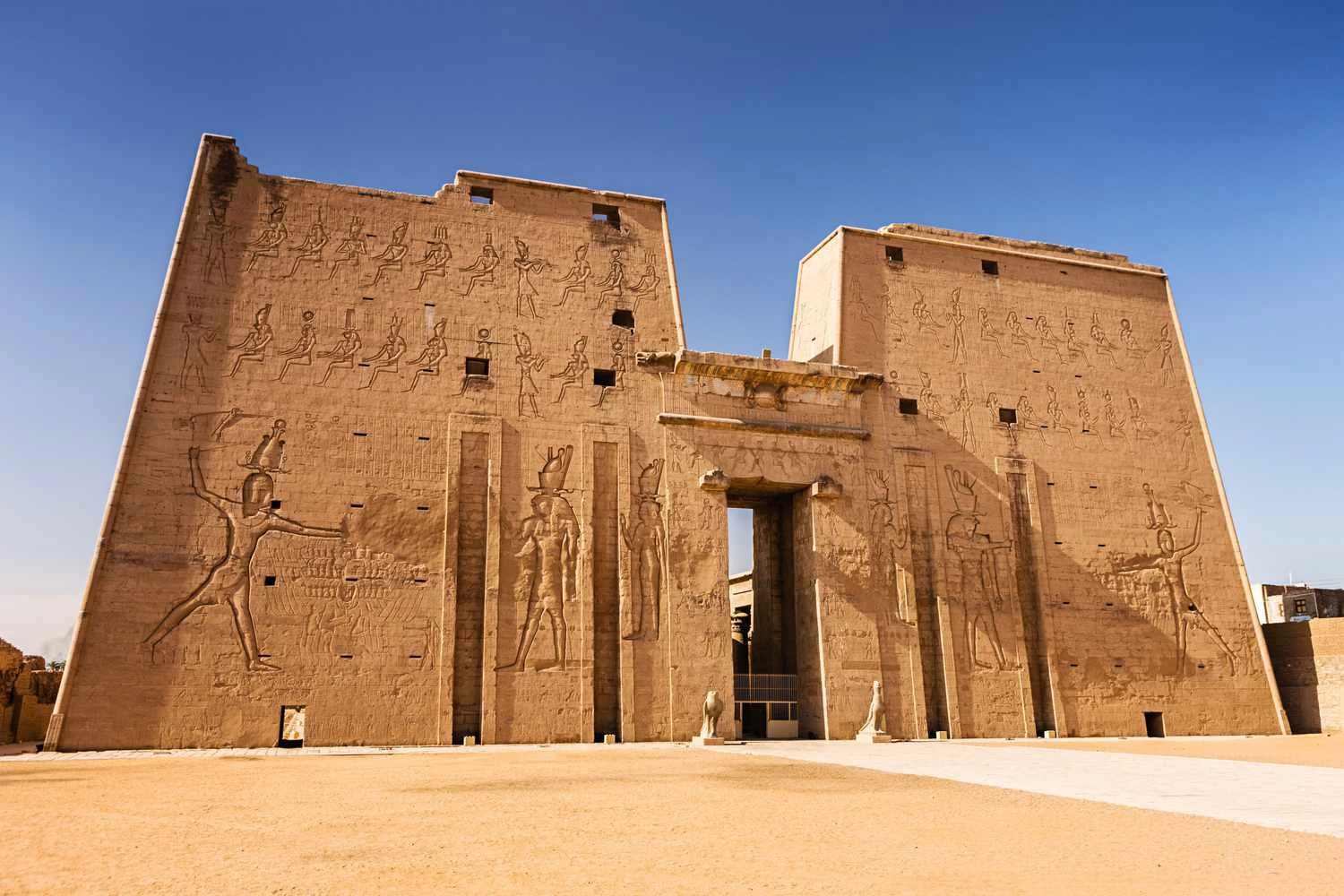
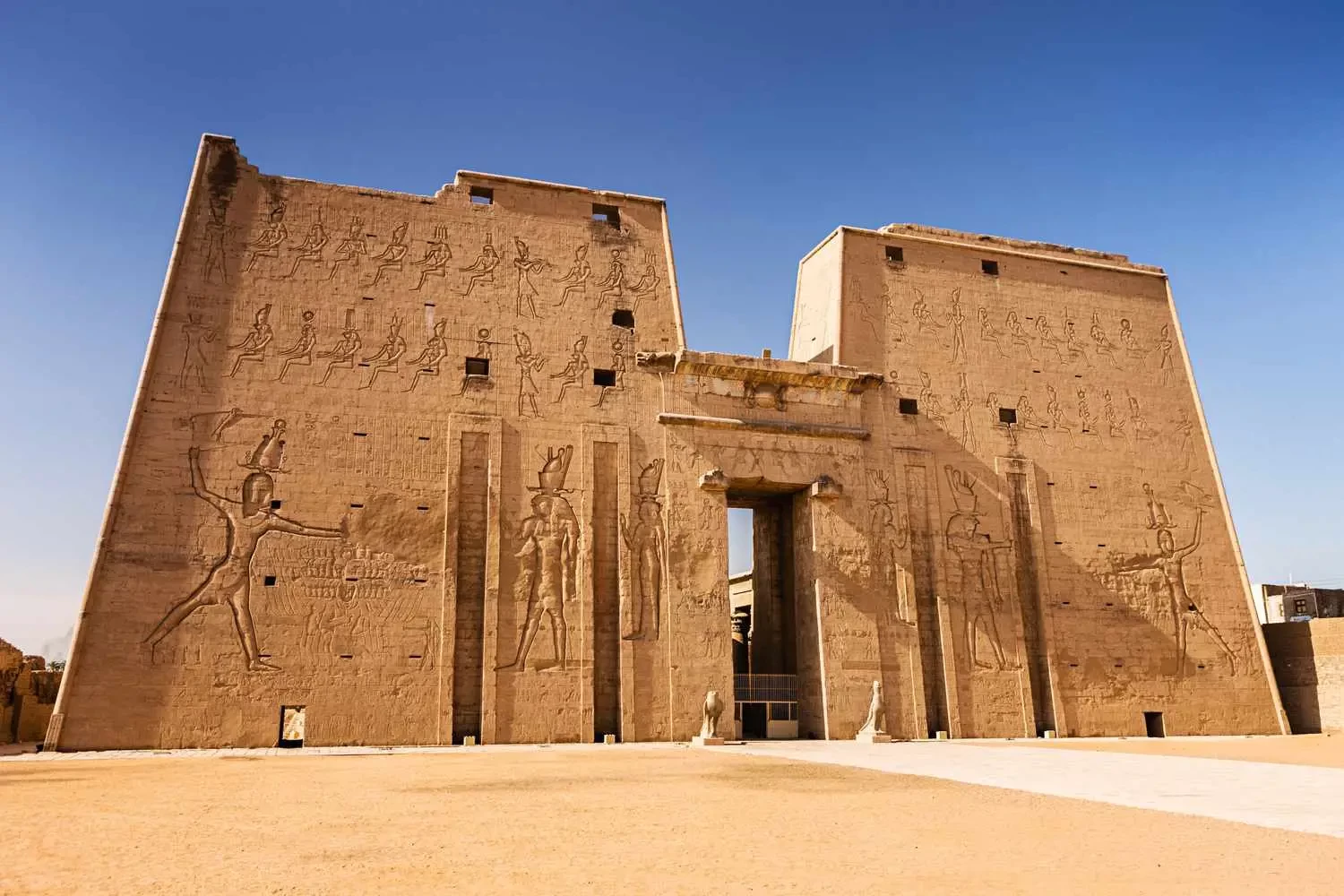
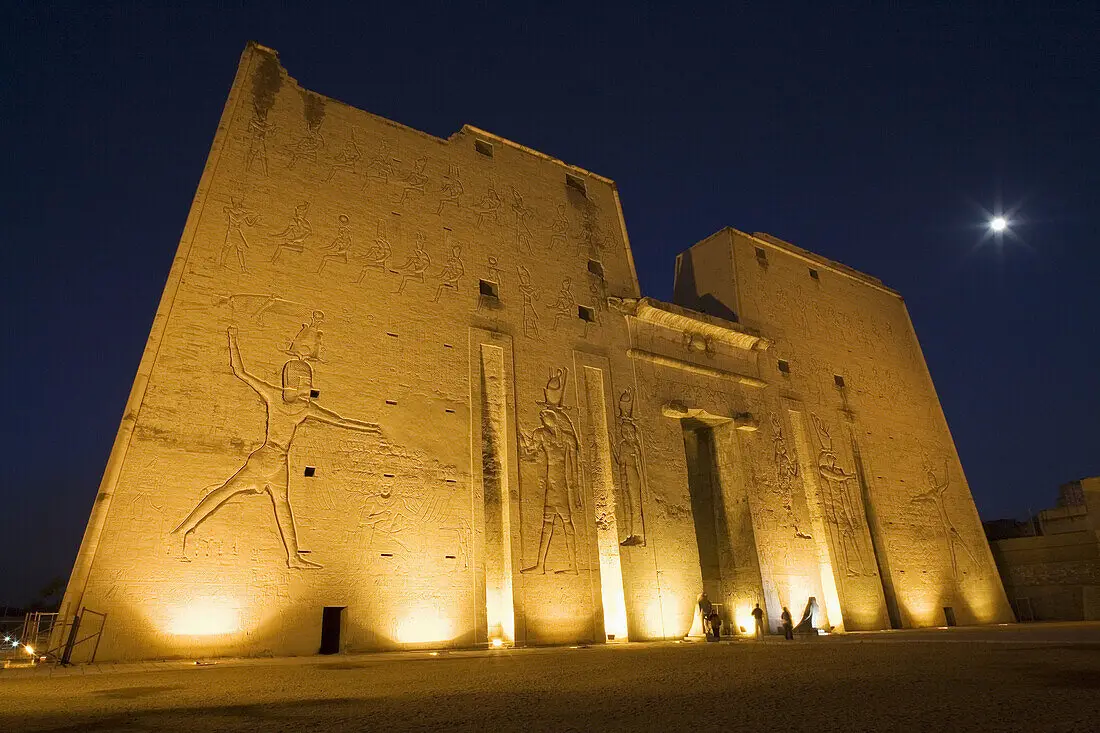
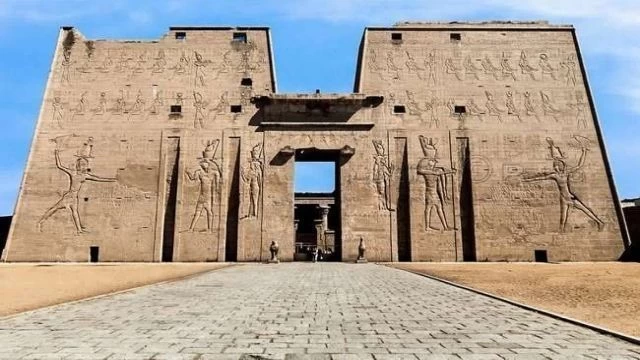
A visit to Edfu Temple begins with its enormous entrance pylon, decorated with reliefs showing the king worshipping the gods and presenting offerings. Two large granite statues of Horus stand in front of the entrance, welcoming visitors into the sacred complex.
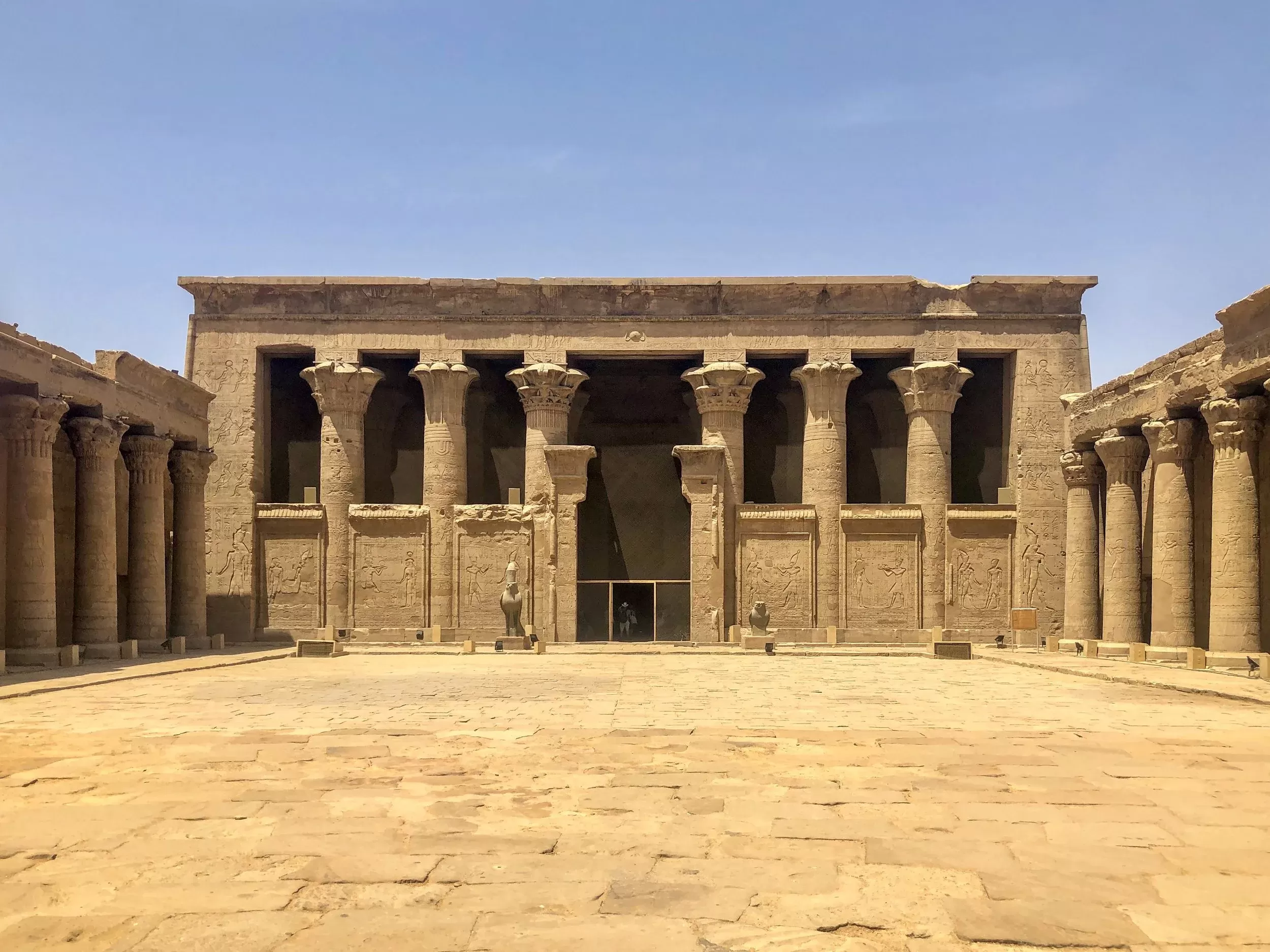
Beyond the entrance is a spacious courtyard surrounded by columns with beautifully decorated floral capitals. From there, visitors continue through the temple's impressive columned halls before reaching the inner areas and the sanctuary.
The walls throughout the temple are covered with ancient Egyptian inscriptions and reliefs. These scenes depict religious ceremonies, offerings, royal rituals, and stories connected with Horus. They provide valuable information about the religious practices and traditions of ancient Egypt.
One of the most important areas is the sanctuary, which formed the heart of the temple. The surrounding rooms and corridors were connected with religious rituals and the daily worship of the god.
The temple's remarkable preservation allows visitors to see many of these architectural and decorative details in their original setting. The Egyptian Ministry of Tourism and Antiquities describes Edfu as one of the most complete and striking ancient Egyptian temples.
How Was Edfu Temple Built and Designed?
The architecture of Edfu Temple reflects the traditions of ancient Egyptian temple construction while also showing the artistic style of the Ptolemaic period.
The temple was constructed over approximately 180 years. Its massive pylon leads into a large open courtyard, followed by two hypostyle halls, additional halls, and finally the sanctuary. This carefully organized sequence created a gradual movement from the public areas of the temple toward its most sacred spaces.
The enormous walls and columns are decorated with detailed reliefs and hieroglyphic texts. These inscriptions are particularly valuable because they record religious ceremonies, royal activities, and aspects of the temple's foundation and rituals.
The temple's architectural scale also reflects the importance of Horus in ancient Egyptian religion. The god was closely connected with kingship, and his temple at Edfu became an important religious center.
Another remarkable feature is the level of preservation. For centuries, the temple remained buried beneath layers of settlement debris, helping protect many of its architectural and decorative elements. Parts of the monument were later uncovered and restored by the French archaeologist Auguste Mariette in the 19th century.
Recent restoration work has also revealed traces of the original colors that once decorated some of the temple's carved reliefs, providing new insight into how vivid the monument may have appeared in ancient times.
How Can You Visit Edfu Temple?
Edfu Temple is located in the city of Edfu on the western bank of the Nile, making it an important stop for travelers exploring the Nile Valley between Luxor and Aswan.
One of the most popular ways to visit the temple is as part of a Nile Cruise. Many Nile itineraries include Edfu as a stop between Luxor and Aswan, allowing travelers to explore the temple while continuing their journey along the river.
Travelers can also arrange a private Edfu Temple tour or include the site in a broader Egypt tour covering the major archaeological attractions of southern Egypt.
The official Egyptian Ministry of Tourism and Antiquities currently lists opening hours that vary by day, with opening times beginning as early as 6:00 AM on some days and 7:00 AM on others. Visitors should check the official information before planning their visit because schedules and ticket information can change.
For a more comfortable experience, it is useful to visit during the cooler parts of the day, especially during Egypt's warmer months. Comfortable walking shoes, water, sun protection, and appropriate clothing are also recommended.
Because Edfu Temple contains extensive inscriptions and religious scenes, visiting with a knowledgeable guide can make the experience much more meaningful. A guide can explain the mythology of Horus, the temple's architectural features, and the meaning behind many of the reliefs.
What Is the Story of Horus and Edfu Temple?
The religious importance of Edfu Temple is closely connected with Horus, one of the most important gods in ancient Egyptian mythology.
Horus was traditionally represented as a falcon or as a man with a falcon's head. He was strongly associated with kingship and protection, making him an important deity within the ancient Egyptian religious tradition.
The temple's inscriptions and reliefs preserve scenes connected with the worship of Horus and the religious ceremonies performed at Edfu. Some scenes depict the sacred journey of Horus in a ceremonial boat accompanied by the goddess Hathor.
The mythology associated with Edfu also reflects the broader ancient Egyptian story of the conflict between Horus and Seth. Horus became an important symbol of legitimate kingship and divine protection, helping explain why a monumental temple was dedicated to his worship at Edfu.
The religious symbolism continues throughout the temple's architecture. The deeper visitors move into the complex, the closer they come to the sacred areas associated with the god.
For travelers interested in ancient Egyptian history, mythology, and religion, the inscriptions at Edfu Temple offer a fascinating way to understand how Egyptians connected their gods, kings, and sacred rituals.
Nearby Attractions to Explore Around Edfu Temple
A visit to Edfu Temple can easily become part of a larger journey through southern Egypt, where travelers can explore several important ancient and cultural attractions.
Kom Ombo Temple
Located farther south toward Aswan, Kom Ombo Temple is famous for its unusual double design and its dedication to the gods Sobek and Horus the Elder. It is a popular stop on many Nile journeys.
Philae Temple
Located near Aswan, Philae Temple is dedicated primarily to the goddess Isis. Its monuments were relocated to Agilkia Island as part of the international campaign to save Nubian monuments from the rising waters caused by the Aswan High Dam.
Abu Simbel Temples
Farther south, the Abu Simbel Temples offer another extraordinary example of ancient Egyptian monumental architecture. The temples of Ramses II are among the most famous archaeological sites in southern Egypt.
Luxor Temples and Karnak Temple
Travelers continuing north toward Luxor can explore Karnak Temple and Luxor Temple, two of Egypt's most important ancient religious complexes.
Combining these destinations with Edfu Temple allows travelers to experience different periods, architectural styles, and religious traditions throughout the Nile Valley.
-webp.webp "Tour to Kom Ombo and Edfu from Aswan")