A Journey Through the History of Kom Ombo Temple
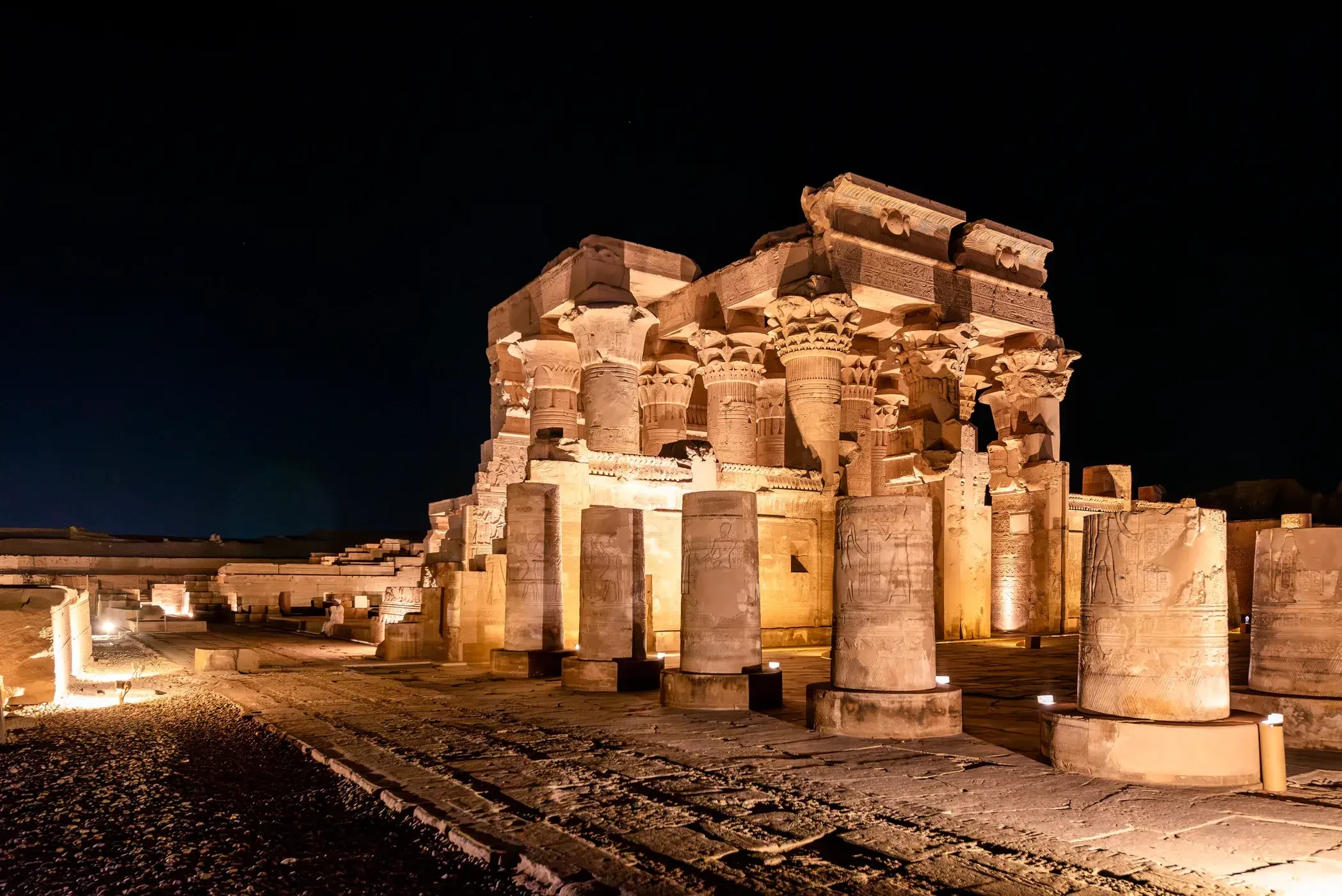
The Temple of Kom Ombo is one of those especially distinctive ancient Egyptian temples in southern Egypt. It sits on the eastern bank of the Nile not far from the town of Kom Ombo, and the place is known for a weird double layout, plus its dedication to two major divinities, Sobek and Horus the Elder.
Because it is right by the river, Kom Ombo Temple also becomes a popular pause for travelers moving along the Nile between Aswan and Luxor. There are ancient reliefs, tall impressive columns, heavy religious symbolism, and a history that keeps pulling you in, so visitors end up seeing the faith and also the building habits of ancient Egypt in a very direct way.
If you are mapping out Aswan attractions, going to Kom Ombo gives you a chance to see a remarkable shrine, while you enjoy the peaceful scenery along the Nile.
What Is the History of the Temple of Kom Ombo?
The history of the Temple of Kom Ombo is closely connected with the Ptolemaic period of ancient Egypt. The present temple was largely built during the Ptolemaic dynasty, beginning in the 2nd century BCE, with additional work continuing during the Roman period.
Unlike many ancient Egyptian temple complexes that were meant mostly for one deity, the whole thing at Kom Ombo seemed built around a double focus; two gods were involved, you could say, even if it feels almost split in the layout. One side went to Sobek, the crocodile god tied to the Nile, fertility and protection, while the other was for Horus the Elder, the falcon-headed figure linked to kingship and the sky.
The spot next to the Nile wasn’t just convenient. It mattered a lot, because the river was right at the center of ancient Egyptian daily life, farming, travel, and even their religious thinking. So Kom Ombo ended up feeling like a notable worship center, and also a place for pilgrimage.
Across the centuries, the temple did take some knocks. Natural forces showed up, and the Nile shifted its course over time. Still, quite a few columns, carved scenes, and inscriptions are still visible today, so visitors can move through the past and take in the religious customs and history of the ancient site.
The remaining bits and pieces make the Temple of Kom Ombo an important archaeological stop for anyone looking at ancient Egyptian history and the way temple architecture progressed during the Ptolemaic and Roman periods.
Why Was the Temple of Kom Ombo Dedicated to Sobek and Horus?
One of the most fascinating things about the Temple of Kom Ombo is that it was dedicated to two different gods. It felt a bit like the whole place was split into two balanced halves, so people could focus on Sobek, and then on Horus the Elder too. In other words, the worship here was not just one direction; it was mirrored, deliberate, and clearly planned.
Sobek showed up in a few ways. Sometimes he appeared as a crocodile, or a man with a crocodile head. He was tied to the Nile, to fertility, to endurance or strength, and also to protection. Since crocodiles were regularly seen along the river, Sobek became a major deity for communities that lived with and depended on that same Nile rhythm.
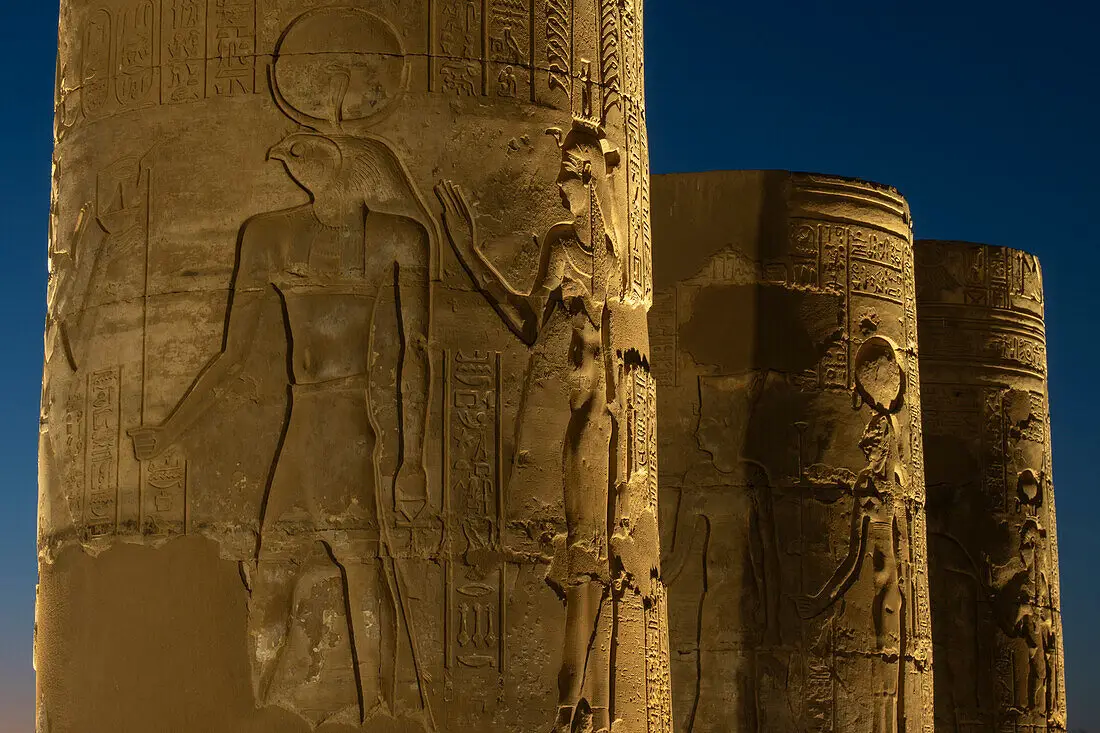
Horus the Elder, also called Horus the Great, was usually pictured with a falcon's head. He had strong links to the sky and to divine kingship. Seeing him at Kom Ombo matters because it underlines how royal life and sacred practice were linked in ancient Egyptian belief.
This dual dedication is what makes the Kom Ombo Temple quite unusual; you notice it fast. A lot of the temple’s architectural features were crafted in pairs, with separate sanctuaries, halls, entryways, and ritual spaces, all tied to the two different spiritual traditions.
So the place does more than just show visitors beautiful, ancient architecture. It also gives a closer view into how ancient Egyptians pictured their gods, and how they layered various parts of their religious views into one single sacred complex.
What Makes the Temple of Kom Ombo Unique?
The most remarkable thing about the Temple of Kom Ombo is probably the symmetrical layout. In practice, the whole complex feels like it was split into two sections, each side devoted to one of its principal gods, and it shows.
When you move around the temple, you notice the reliefs are still in very good shape. They portray gods, pharaohs, religious ceremonies, and offerings. In a real way, these engravings give useful information about ancient Egyptian ideas and artistic habits.
There is also another eye-catching aspect: the temple has reliefs tied to medicine and everyday ancient Egyptian practices. In one well-known carving, you can see instruments that people often read as surgical tools, which makes you look at how early medicine was approached.
The temple is also discussed in connection with crocodile worship. A few mummified crocodiles were found in the surrounding region, and you can actually see some of them at the nearby Crocodile Museum. It adds more context about how Sobek was honored, and why crocodiles held such strong religious value.
Being there right by the river gives the whole outing another angle. From the temple, visitors can look out over the Nile, and while they walk around the site, it feels like you are touring one of the most distinctive archaeological spots in southern Egypt.
For travelers weighing Aswan attractions, the mix of old stone architecture, a mythology layer, Nile scenery, and this unusual double design makes Temple of Kom Ombo a destination that stays with you.
How Can You Visit the Temple of Kom Ombo?
The Temple of Kom Ombo sits roughly 45 kilometers north of Aswan, so it’s a pretty reachable place for travelers who are staying in Aswan. Since it lies right along the Nile, it also becomes a usual stop for many Nile journeys that run between Aswan and Luxor, which makes planning easier.
A really enjoyable approach is to visit while you are on a Nile Cruise. A lot of cruises include Kom Ombo, giving passengers time to wander around the temple first, then continue downstream.
You can also put the temple into a private Aswan tours, or join organized trips where Kom Ombo is paired with other ancient sites across southern Egypt.
Because the temple area is open and archaeological, it helps to wear comfortable clothing and use walking shoes that feel reliable. Bringing water, plus sun protection, is wise too. If you go earlier in the day, or in the cooler months, the overall viewing is noticeably more comfortable.
A visit to Kom Ombo can be especially rewarding when it is paired with wandering through other important sites around Aswan. When you see the temple while the Nile landscape is nearby and you also stop by nearby archaeological points, travelers often pick up a richer understanding of southern Egypt, history, and its culture.
If you are curious about ancient Egyptian history, religious mythology, architecture, or you just want some distinct things to do in Aswan, the Temple of Kom Ombo is well worth putting on your itinerary.